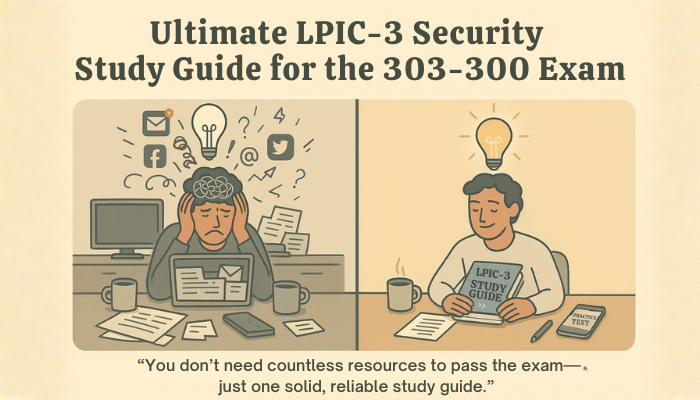
A strong Linux security certification is more than a credential. It’s a signal that you understand enterprise-level Linux environments deeply enough to protect, audit, and harden them. For many cybersecurity professionals and aspiring IT auditors, the LPIC-3 Security certification stands out as a milestone. If you are searching for a reliable LPIC-3 303 study guide PDF, practical study steps, and hands-on practice test guidance, this comprehensive roadmap will help you prepare confidently and strategically.
The LPIC-3 303-300 exam focuses entirely on Linux security. As a senior-level certification from the Linux Professional Institute (LPI), the credential validates skills that employers around the world trust. Whether you work in cybersecurity, system administration, compliance, or Linux engineering, this exam can significantly elevate your career trajectory.
What Is the LPIC-3 303-300 Security Certification?
The LPIC-3 Security exam (303-300) is one of the most advanced credentials under the LPIC certification track. Recognized globally, it demonstrates the ability to secure, monitor, and harden enterprise Linux systems. It is aimed at experienced Linux professionals seeking mastery in system-wide security configurations.
According to the official certification body, the Linux Professional Institute, the LPIC-3 Security exam covers key areas such as cryptography, access control, network protection, and vulnerability assessment. Unlike foundational certifications, this one tests your real-world experience with Linux security in depth.
LPIC-3 303-300 Exam Overview
- Exam Name: LPIC-3 Security
- Exam Code: 303-300
- Duration: 90 minutes
- Number of Questions: 60
- Passing Score: 500 out of 800
- Exam Fee: 200 USD
This exam structure requires strong conceptual understanding combined with practical command-line experience. A focused LPIC-3 303 study guide PDF combined with hands-on practice can significantly boost your chances of a high score.
LPIC-3 303-300 Exam Syllabus and Key Topics
The exam syllabus is well-defined and publicly available from the certification authority. Below is the breakdown of what you must master:
✅ Cryptography
Cryptography is central to Linux security. You will need a thorough understanding of both symmetric and asymmetric encryption, hashing techniques, secure key management, and GPG operations. Be ready to configure OpenSSL, manage TLS certificates, and troubleshoot encryption-related failures.
✅ Host Security
This topic includes file system security, Linux permissions, Pluggable Authentication Modules (PAM), auditing frameworks, chroot environments, intrusion detection, and secure boot processes. Host hardening is one of the most hands-on sections and requires command-level practice.
✅ Access Control
Expect deep coverage of Mandatory Access Control (MAC) frameworks like SELinux and AppArmor. You should be able to create policies, troubleshoot denials, and secure access boundaries across processes, users, and applications.
✅ Network Security
This segment covers packet filtering, VPNs, firewalls, secure communication protocols, and risk mitigation strategies. You must know how to configure iptables, nftables, SSH hardening, IPsec, and secure network segmentation.
✅ Threats and Vulnerability Assessment
Be prepared to assess Linux systems using automated scanners, log analysis tools, IDS solutions, and vulnerability management workflows. You should also understand common threat models, system auditing, and incident response fundamentals.
This well-rounded coverage ensures that certified professionals are ready for complex real-world challenges.
Why the LPIC-3 303 Study Guide PDF Matters for Your Preparation
A carefully structured LPIC-3 303 study guide PDF is extremely useful when preparing for an exam of this difficulty. It helps unify topics, consolidate the scattered concepts, and create a linear study flow. Additionally, a downloadable and portable LPIC-3 PDF allows you to review material while traveling, commuting, or working across devices.
A high-quality study guide typically includes:
- A complete breakdown of the LPIC-3 303 syllabus
- Real-world examples to reinforce learning
- Linux commands and practice scenarios
- Topic-wise summaries for faster revision
- Exam-oriented tips and tricks
For official objectives, reference material from the Linux Professional Institute adds credibility and accuracy. It’s recommended to compare your study guide with the certification authority’s documentation to stay aligned with updates.
How to Prepare for the LPIC-3 303-300 Exam: A Practical Study Roadmap
Professionals preparing for the exam often ask how much time is required and where to begin. Below is a structured preparation roadmap used effectively by cybersecurity specialists and IT auditors.
✅Start with the Official Exam Objectives
Visit the certification authority’s exam objectives to understand what the exam covers. Build your baseline by studying the five key domains thoroughly. This helps you set realistic timelines for the next steps.
✅Build Your Foundation Using Authoritative Study Material
Use an LPIC-3 303 study guide PDF that maps directly to the syllabus. Combine it with reputable resources such as:
- Wikipedia for foundational cryptography concepts
- NIST documentation for security standards
- The Internet Engineering Task Force for protocol specifications
- Red Hat documentation for Linux security implementations
- OWASP for vulnerability assessment best practices
These non-commercial, authoritative sources strengthen knowledge and help answer conceptual questions confidently.
✅ Develop Hands-On Skills Through Linux Labs
A senior-level exam cannot be passed by reading alone. Set up virtual machines or containers and practice:
- Policy creation in SELinux
- VPN setup
- Firewall rules using nftables
- TLS certificate deployment
- Audit logging configurations
Lab exercises reinforce concepts and increase your speed and accuracy during the exam.
✅ Strengthen Exam Readiness with Practice Tests
Knowledge alone does not reflect exam readiness until you test yourself. You can refer to high-quality practice questions at the following resources:
- Mastering enterprise-level security guide
- LPIC-3 303-300 sample question bank
Both help build familiarity with question patterns, difficulty levels, and time management.
✅ Review and Reinforce
In the final week, revise your LPIC-3 303 study guide, redo important labs, and focus on areas that still feel weak. Candidates who follow a repeated review cycle tend to perform significantly better.
Career Benefits of Earning the Linux Certification LPIC-3
Professionals who earn the LPIC-3 certification often see accelerated career growth. This credential demonstrates mastery in Linux security, making you an asset in specialized roles such as:
- Linux Security Engineer
- Security Analyst
- IT Auditor
- Cybersecurity Consultant
- DevSecOps Specialist
- Senior System Administrator
This certification helps differentiate you from generic IT profiles by proving deep expertise in securing enterprise Linux environments.
Why Practice Tests Are Essential Before Attempting the LPI Certification Exam
✅ They Reveal Your Knowledge Gaps Instantly
Even if you’ve studied thoroughly, it’s common to miss certain topics.
Practice tests highlight:
- Weak concepts you need to revisit
- Domains where you’re scoring inconsistently
- Linux commands or configuration areas you may have overlooked
This saves you time and makes your study strategy dramatically more efficient.
✅ They Familiarize You With the Real Exam Format
LPI exams follow a well-defined structure and question style.
Practice tests help you understand:
- The difficulty level of questions
- How topics like system architecture, package management, filesystems, permissions, and networking appear on the exam
- Time-management challenges you’ll face during the test
This reduces uncertainty and boosts your confidence going in.
✅ They Help Build Exam-Day Confidence
The biggest hurdle many test-takers face isn’t the content—it’s anxiety.
Taking realistic practice exams:
- Conditions your mind for exam-style thinking
- Lowers test-day stress
- Helps you stay calm under pressure
Confidence often makes the difference between passing and failing.
✅ They Strengthen Your Command Over Linux Concepts
LPI exams heavily emphasize practical Linux knowledge.
When you repeatedly apply what you know in a test-like environment, you:
- Reinforce memory
- Create deeper conceptual understanding
- Connect theory with real-world Linux administration tasks
Practice tests transform passive studying into active mastery.
✅ They Improve Speed and Accuracy
Time management is a major factor in LPI exam success.
Practice tests help you:
- Develop the habit of answering quickly but accurately
- Reduce overthinking
- Recognize patterns in question types
You learn exactly how much time to spend on each question.
✅ They Provide a Realistic Benchmark of Readiness
Many candidates assume they are prepared… until they take a practice test.
A good benchmark is:
- Score of 80%+ consistently → You’re exam-ready
- Score below 70% → Study more before booking the exam
This ensures you don’t waste money or risk failing due to poor preparation.
✅ They Reinforce Long-Term Retention
Linux concepts—especially commands, flags, and configuration sequences—are easy to forget.
Practice tests use repetition and retrieval to lock these concepts into long-term memory, making them easier to recall on exam day.
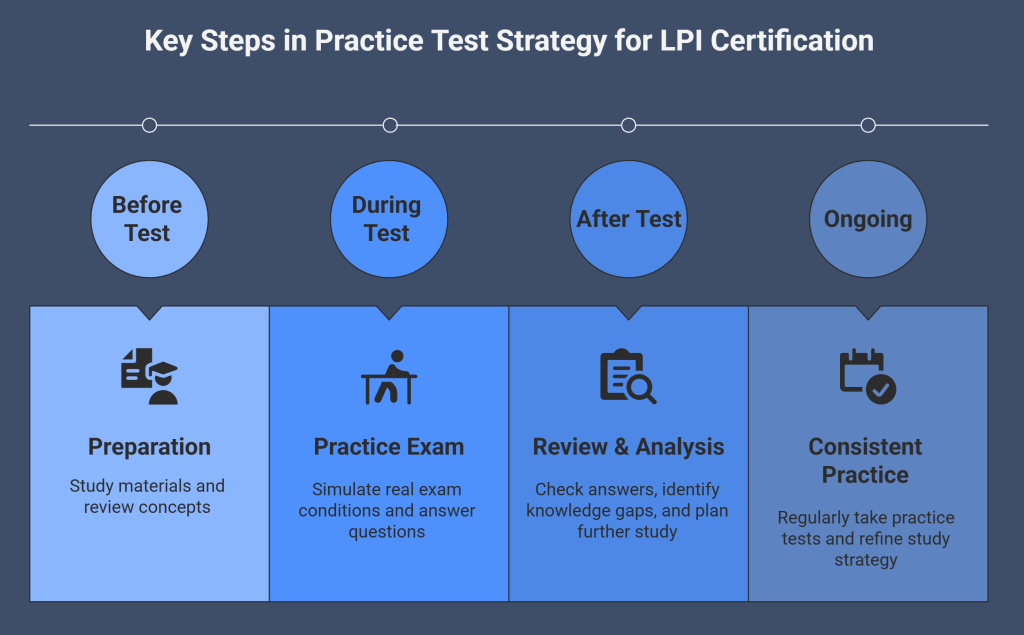
After completing a practice test, review all answers and analyze areas that require additional study. A consistent practice test strategy significantly improves your chances of scoring above 500.
FAQs
Q1. What is the LPIC-3 303-300 exam?
It is the senior-level LPIC-3 Security certification exam focused on enterprise Linux security.
Q2. Is the LPIC-3 303 study guide PDF enough for preparation?
It is useful but must be combined with hands-on labs and practice tests.
Q3. How difficult is the LPIC-3 Security exam?
It requires deep Linux experience and strong familiarity with security tools and configurations.
Q4. How many questions are in the LPIC-3 303 exam?
The exam contains 60 questions.
Q5. What score is required to pass the LPIC-3 303-300 exam?
A minimum of 500 out of 800 is required to pass.
Q6. Are there practice tests available for the LPIC-3 certification?
Yes, high-quality practice questions are available through recommended training platforms.
Q7. What topics are included in the LPIC-3 303 syllabus?
Cryptography, host security, access control, network security, and vulnerability assessment.
Q8. How long should I study for the LPIC-3 Security exam?
Most professionals prepare for four to eight weeks, depending on prior experience.
Q9. Is the LPIC-3 certification useful for cybersecurity careers?
Yes, it is a respected credential that aligns with advanced Linux security roles.
Q10. Can beginners attempt the LPIC-3 Security exam?
It is not recommended for beginners; prior Linux experience is essential.
Conclusion: Preparing with the Right LPIC-3 303 Study Guide PDF and Practice Tests
The LPIC-3 Security certification is a challenging but rewarding achievement. With the right LPIC-3 303 study guide PDF, hands-on practice, and consistent preparation, you can excel in the LPIC-3 303-300 exam and strengthen your professional credibility. A well-planned strategy, combined with authoritative study material and quality practice tests, is the fastest way to success.
As the Linux security landscape continues to expand, earning the LPIC-3 certification places you at the forefront of enterprise-level security. Start your preparation with confidence and use structured study methods to achieve your certification goal.
To deepen your understanding of advanced Linux security concepts, read this in-depth guide on Mastering Enterprise-Level Security: LPIC-3 Security Certification from EduSum.


