The CREST Registered Threat Intelligence Analyst (CRTIA) certification is a pivotal credential for professionals aiming to excel in the nuanced field of cyber threat intelligence. This certification, offered by CREST, validates an individual’s ability to perform sophisticated threat intelligence analysis, translating raw data into actionable insights for organizational defense. Unlike basic certifications, the CRTIA exam challenges candidates to demonstrate a deep understanding of the threat intelligence lifecycle, from collection and analysis to dissemination and ethical considerations, embodying the practical skills top analysts routinely employ.
Aspiring threat intelligence analysts often wonder what distinguishes exceptional performance on the CRTIA exam. It isn’t merely about memorizing concepts but rather about internalizing methodologies and understanding how to apply them in real-world scenarios. This guide delves into the core components of the CRTIA, offering practical strategies and insights gleaned from the experiences of successful analysts, helping you prepare effectively and build confidence for this rigorous assessment.
Understanding the CRTIA Exam Structure and Objectives
The CRTIA exam, identified by its exam code CRTIA, is meticulously designed to assess a candidate’s comprehensive grasp of threat intelligence principles and practices. This assessment evaluates not just theoretical knowledge but also the practical application of analysis methodologies crucial for effective intelligence operations. Familiarity with the exam’s format and expectations is the first step toward a focused preparation strategy.
Here’s a breakdown of the key structural elements and objectives for the CREST Registered Threat Intelligence Analyst certification:
- Exam Name: CREST Registered Threat Intelligence Analyst (CRTIA)
- Exam Code: CRTIA
- Exam Price: $400 (USD)
- Duration: Candidates are allotted 120 minutes to complete the examination.
- Number of Questions: The exam comprises 120 multiple-choice questions.
- Passing Score: A score of 70% or higher is required to pass the CRTIA exam.
These details highlight the need for both speed and accuracy, emphasizing a solid foundation in the core subject matter to navigate the extensive question bank efficiently.
Exploring the Comprehensive CRTIA Syllabus Topics
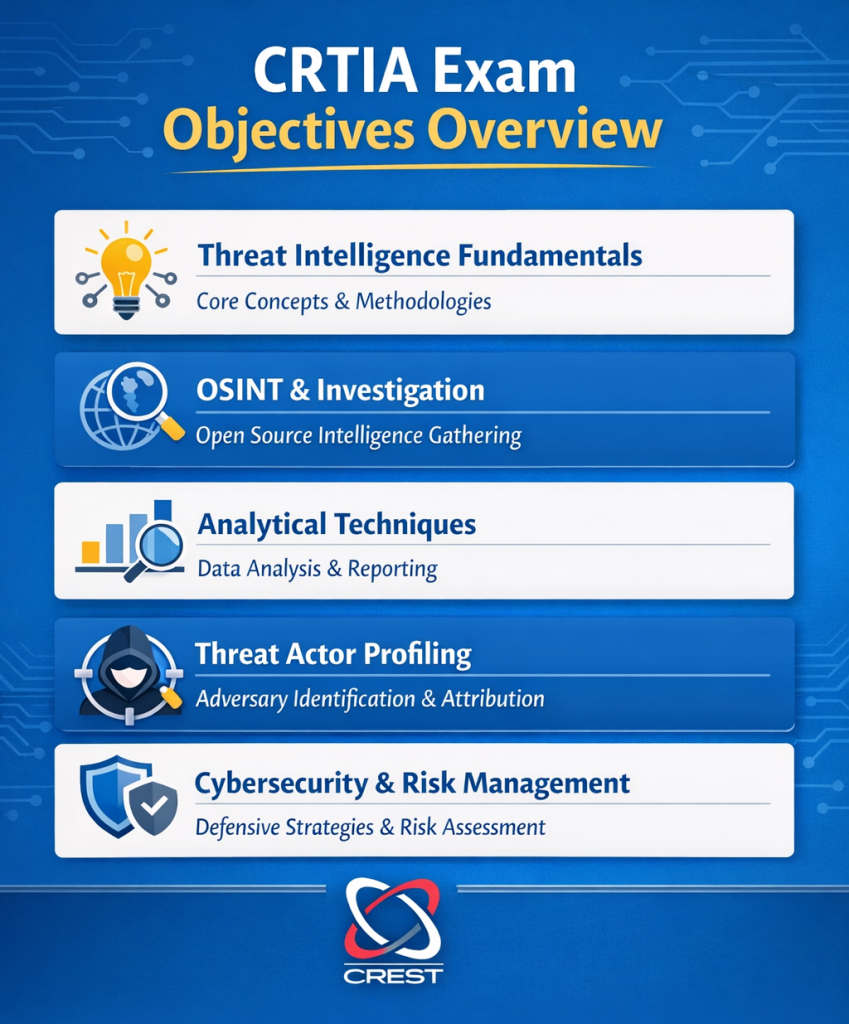
The CREST CRTIA syllabus is extensive, reflecting the multifaceted nature of threat intelligence work. It covers everything from foundational business imperatives to advanced attack attribution techniques, ensuring certified analysts possess a holistic skill set. A thorough understanding of these topics forms the bedrock of a successful preparation strategy for the CREST Registered Threat Intelligence Analyst certification.
Foundational Principles and Lifecycle Management
- Business Imperative: Understanding the organizational context and strategic value of threat intelligence.
- Terminology: Mastering the common lexicon used in threat intelligence.
- Threat Actors & Attribution: Identifying different types of adversaries and methods for attributing their actions.
- Attack Methodology: Grasping the common tactics, techniques, and procedures (TTPs) used in cyber attacks.
- Analysis Methodology: Applying structured approaches to interpret and make sense of threat data.
- Process and Intelligence Lifecycle: Navigating the stages of planning, collection, processing, analysis, and dissemination.
- Principles of Intelligence: Adhering to core tenets like timeliness, accuracy, and relevance.
- Requirements Analysis (Scoping): Defining intelligence needs to guide collection efforts effectively.
- Intelligence Planning: Developing strategies for intelligence gathering and production.
- Project Review: Evaluating the effectiveness and impact of intelligence initiatives.
Data Collection, Reliability, and Operational Security
Effective threat intelligence hinges on robust data collection and meticulous handling of sources. This section of the syllabus focuses on the practical aspects of gathering information while maintaining operational security. Analysts who later move into offensive work often study the CREST CCRTS credential for its simulated attack focus.
- Collection Planning: Strategizing how and where to acquire necessary data.
- Data Sources and Acquisition: Identifying and utilizing diverse sources of information.
- Data Reliability: Assessing the trustworthiness and veracity of collected data.
- Registration Records: Extracting intelligence from domain and IP registration data.
- Domain Name Server (DNS): Leveraging DNS information for investigative purposes.
- Web Enumeration and Social Media: Gathering intelligence from public web sources and social platforms.
- Document Metadata: Analyzing embedded information in digital documents.
- Dump Site Scraping: Collecting data from compromised repositories.
- Operational Security: Protecting intelligence operations from adversary detection.
- Bulk Data Collection: Managing and processing large volumes of threat data.
- Handling Human Sources: Ethical and secure engagement with human intelligence assets.
Advanced Analysis, Delivery, and Management
Beyond raw data, analysts must be adept at contextualizing findings, applying advanced analytical techniques, and effectively communicating intelligence. The CRTIA syllabus ensures candidates are well-versed in these critical skills.
- Contextualisation: Placing raw data into a relevant operational or strategic framework.
- Analysis Methodologies: Employing various techniques to derive meaning from complex datasets.
- Machine Based Techniques: Utilizing automated tools and algorithms for data analysis.
- Statistics: Applying statistical methods to identify patterns and anomalies.
- Critique: Evaluating the quality and limitations of intelligence products.
- Consistency: Ensuring uniformity and coherence in intelligence reporting.
- Forms of Delivery: Mastering various methods for disseminating intelligence.
- Technical Data Sharing: Understanding formats and protocols for exchanging technical indicators.
- Intelligence Sharing Initiatives: Participating in collaborative intelligence ecosystems.
- Intelligence Handling and Classification: Managing sensitive information securely.
- Client Management & Communications: Interacting effectively with intelligence consumers.
- Project Management: Overseeing intelligence projects from inception to completion.
- Reporting: Crafting clear, concise, and impactful intelligence reports.
Legal, Ethical, and Technical Underpinnings
A thorough understanding of the legal, ethical, and technical landscape is paramount for any credible threat intelligence analyst. This segment covers the crucial frameworks and technical knowledge required.
- Understanding, Explaining and Managing Risk: Identifying, assessing, and mitigating cyber risks.
- Third Parties: Managing intelligence related to supply chain and partner risks.
- Regulator Mandated TI Schemes: Complying with industry-specific threat intelligence regulations.
- Law & Compliance: Navigating legal frameworks and compliance requirements relevant to intelligence activities.
- Ethics: Adhering to professional and ethical standards in intelligence gathering and use.
- IP Protocols: Knowledge of fundamental network communication protocols.
- Cryptography: Understanding encryption, decryption, and secure communication methods.
- Vulnerabilities: Identifying and analyzing weaknesses in systems and software.
- Intrusion Vectors: Recognizing common pathways for system compromise.
- Command & Control and Exfiltration Techniques: Detecting adversary communication and data theft methods.
- Attack Attribution: Advanced techniques for linking attacks to specific actors.
- Current Threat Landscape: Staying updated on emerging threats and trends.
Cultivating a Strategic Mindset for CRTIA Exam Success
Passing the CRTIA exam requires more than just knowing the material; it demands a strategic approach to preparation and problem-solving during the test itself. Top analysts develop a mindset that prioritizes understanding over rote memorization, allowing them to apply concepts to diverse scenarios. This cognitive flexibility is a hallmark of successful threat intelligence work.
How to Prepare for the CREST CRTIA Exam
Effective preparation for the CREST CRTIA certification involves a multi-faceted approach, blending theoretical study with practical application. It’s about building a robust foundation that can withstand the scrutiny of a challenging exam.
- Deep Dive into the Syllabus: Start by thoroughly reviewing the official CRTIA syllabus provided by CREST. Map out each topic and assess your current knowledge level.
- Leverage Official Resources: While CREST doesn’t publish specific study guides, the syllabus often points to foundational texts and frameworks. Explore their official CRTIA certification page for any recommended reading or external resources.
- Structured Study Plan: Break down the syllabus into manageable modules. Allocate dedicated time for each section, focusing more on areas where you feel less confident. Consistent, scheduled study sessions are more effective than sporadic cramming.
- Practice with Sample Questions: Familiarize yourself with the question style and format. Resources like CREST Registered Threat Intelligence Analyst sample questions can provide invaluable insight. You can find CREST CRTIA certification sample questions to test your understanding. One such resource is available at Edusum, which can help gauge your readiness.
- Ethical Preparation is Key: While it might be tempting to look for “dumps,” relying on such materials undermines the integrity of the certification and your own learning. Focus on understanding the material deeply, not just memorizing answers.
Enhancing Your Threat Intelligence Analyst Certification Career Path
Attaining the CRTIA certification significantly impacts an individual’s career trajectory, offering substantial CRTIA certification benefits that extend beyond mere credentialing. It signals to employers a high level of competency and commitment to the threat intelligence domain, opening doors to advanced roles and leadership opportunities. This certification can redefine your professional standing within the cybersecurity community.
CRTIA Certification Benefits and Career Growth
Investing time and effort into the CREST CRTIA certification is a strategic move for any cybersecurity professional. The benefits are multifaceted, impacting both immediate job prospects and long-term career development.
- Enhanced Credibility: CREST is a globally recognized and respected body in cybersecurity. Holding a CRTIA certification immediately elevates your professional standing and credibility.
- Specialized Skill Validation: The certification rigorously validates your expertise in the threat intelligence lifecycle, attribution, analysis methodologies, and reporting—skills highly sought after by organizations.
- Career Advancement: Certified individuals are often prioritized for senior threat intelligence analyst roles, leading to increased responsibilities and leadership opportunities.
- Higher Earning Potential: Specialized certifications like CRTIA are frequently associated with competitive salaries, reflecting the high demand for skilled threat intelligence professionals.
- Industry Recognition: Being a CREST Registered Threat Intelligence Analyst places you among a select group of professionals globally, fostering networking opportunities and peer recognition.
Navigating the CRTIA Exam Difficulty and Best Prep Resources
Many candidates often inquire about the CREST CRTIA exam difficulty, a crucial consideration for those planning their preparation. While challenging, the exam is designed to fairly assess a candidate’s practical and theoretical understanding of threat intelligence. Success often hinges on choosing the best resources for CREST CRTIA exam prep and committing to a structured study regimen.
Effective Study Materials and Training Courses
To conquer the CRTIA exam, leveraging the right study materials and potentially enrolling in a comprehensive CREST Registered Threat Intelligence Analyst training course is paramount. These resources provide the structured learning and depth of knowledge required.
- Official CREST Syllabus: As mentioned, the syllabus is your primary guide, outlining all the CRTIA exam topics covered. Use it as a checklist to ensure no area is overlooked.
- Industry-Standard Textbooks: Supplement your knowledge with authoritative books on cyber threat intelligence, information security analysis, and advanced persistent threats (APTs). Look for titles that cover the analytical methodologies and technical aspects extensively.
- Specialized Training Courses: Consider enrolling in a dedicated CREST Registered Threat Intelligence Analyst training course. These courses often provide structured learning paths, expert instructors, and practical exercises that can solidify your understanding.
- Online Platforms and Communities: Engage with cybersecurity forums, LinkedIn groups, and threat intelligence communities. Discussions and shared experiences can offer different perspectives and insights into complex topics, as highlighted by expert tips available online, such as this article on
passing the CREST CRTIA exam. - Practical Experience: Real-world experience in a Security Operations Center (SOC), incident response, or threat hunting role is invaluable. The exam tests practical application, so hands-on experience interpreting data and identifying threats will significantly boost your chances.
Is CREST CRTIA Certification Worth It? Evaluating the Investment
Prospective candidates often ponder, “is CREST CRTIA certification worth it?” The answer lies in evaluating the long-term career impact, the depth of knowledge gained, and the recognition conferred by the CREST organization. Considering the CREST threat intelligence certification cost, understanding its return on investment becomes a critical factor in this decision.
Return on Investment for CRTIA Certification
The CRTIA certification requires a significant investment of time, effort, and financial resources. However, the potential returns in terms of career opportunities, professional growth, and validation of advanced skills often far outweigh these initial costs.
- High Demand for Skilled Analysts: The cybersecurity landscape faces a persistent shortage of skilled threat intelligence professionals. Organizations are actively seeking individuals who can provide actionable intelligence to counter evolving threats.
- Validation of Expertise: CREST certifications are recognized globally for their rigor and relevance. The CRTIA validates a candidate’s ability to perform complex threat intelligence analysis, making them a valuable asset to any security team.
- Career Specialization: For professionals looking to specialize exclusively in threat intelligence, the CRTIA provides a clear, recognized path. It distinguishes them from general cybersecurity practitioners.
- Networking and Community: Becoming CREST certified connects you with a community of elite professionals, fostering opportunities for collaboration and continuous learning.
- Long-Term Value: Unlike some certifications that quickly become outdated, the foundational and analytical skills tested by the CRTIA are enduring, providing long-term career value and adaptability to new threat landscapes.
Frequently Asked Questions
Q1. What is the CRTIA certification?
A1. The CRTIA, or CREST Registered Threat Intelligence Analyst certification, is a professional credential that validates an individual’s ability to perform comprehensive threat intelligence analysis, covering the entire intelligence lifecycle from collection to dissemination.
Q2. How difficult is the CREST CRTIA exam?
A2. The CREST CRTIA exam is considered challenging due to its breadth and depth, requiring both theoretical knowledge and practical application skills across a wide range of threat intelligence topics. A passing score of 70% is required.
Q3. What are the CRTIA certification requirements?
A3. While CREST does not specify mandatory prerequisites, candidates are expected to have a strong background in cybersecurity and practical experience in threat intelligence or related fields to successfully attempt the CRTIA exam.
Q4. How should I prepare for the CRTIA exam?
A4. Effective preparation involves a thorough review of the official CREST CRTIA syllabus, leveraging official resources, developing a structured study plan, practicing with sample questions, and gaining practical experience in threat intelligence analysis.
Q5. What career opportunities does CRTIA open up?
A5. The CRTIA certification can lead to advanced roles such as Senior Threat Intelligence Analyst, Cyber Threat Hunter, or Intelligence Lead, enhancing credibility, career advancement, and earning potential within the cybersecurity industry.
Conclusion
The CRTIA certification is more than just a credential; it’s an affirmation of a professional’s deep expertise in threat intelligence. For those committed to a career at the forefront of cyber defense, understanding and mastering the principles outlined in this guide will not only lead to exam success but also cultivate the critical thinking and analytical prowess that define top threat intelligence analysts.
To further solidify your preparation and explore comprehensive study resources for the CRTIA exam, visit
CRTIA exam preparation. This platform offers valuable tools and insights designed to help you confidently approach the CREST Registered Threat Intelligence Analyst certification, ensuring you’re well-equipped to excel.


