
The SailPoint Certified IdentityIQ Engineer certification stands as a pivotal credential for professionals aiming to master the intricacies of identity and access management (IAM) with SailPoint’s IdentityIQ platform. This specialized certification, identified by the exam code IdentityIQ Engineer, validates a candidate’s comprehensive skills in designing, implementing, and maintaining robust IAM solutions. As organizations grapple with escalating cyber threats and complex compliance demands, the expertise of a SailPoint IdentityIQ Engineer becomes indispensable, ensuring secure, efficient, and future-proof identity governance.
Validating Expertise: The SailPoint IdentityIQ Engineer Certification
Achieving the SailPoint Certified IdentityIQ Engineer designation signifies a deep technical understanding and practical proficiency in the IdentityIQ platform. This certification is tailored for individuals who work hands-on with the system, from initial deployment to ongoing optimization and customization. It provides a formal recognition of the skills required to navigate the complexities of identity lifecycle management, access requests, and compliance reporting within large enterprise environments.
The role of an IdentityIQ Engineer extends beyond basic configuration; it involves strategic planning and problem-solving to align IAM solutions with business objectives. This certification not only boosts individual career prospects but also assures employers of a candidate’s capability to deliver high-quality, secure identity governance solutions. It solidifies a professional’s position as a key contributor to an organization’s security posture and operational efficiency.
Understanding the IdentityIQ Engineer Examination
The SailPoint Certified IdentityIQ Engineer exam (Exam Code: IdentityIQ Engineer) assesses a candidate’s mastery across several critical domains of the IdentityIQ platform. Successfully navigating this examination requires a blend of theoretical knowledge and practical application, mirroring real-world challenges faced by engineers.
The examination is structured to evaluate a candidate’s ability to perform essential tasks and troubleshoot common issues effectively. It ensures that certified professionals can confidently contribute to their organization’s identity management initiatives. The detailed breakdown of the exam helps candidates focus their preparation efforts on the most relevant areas.
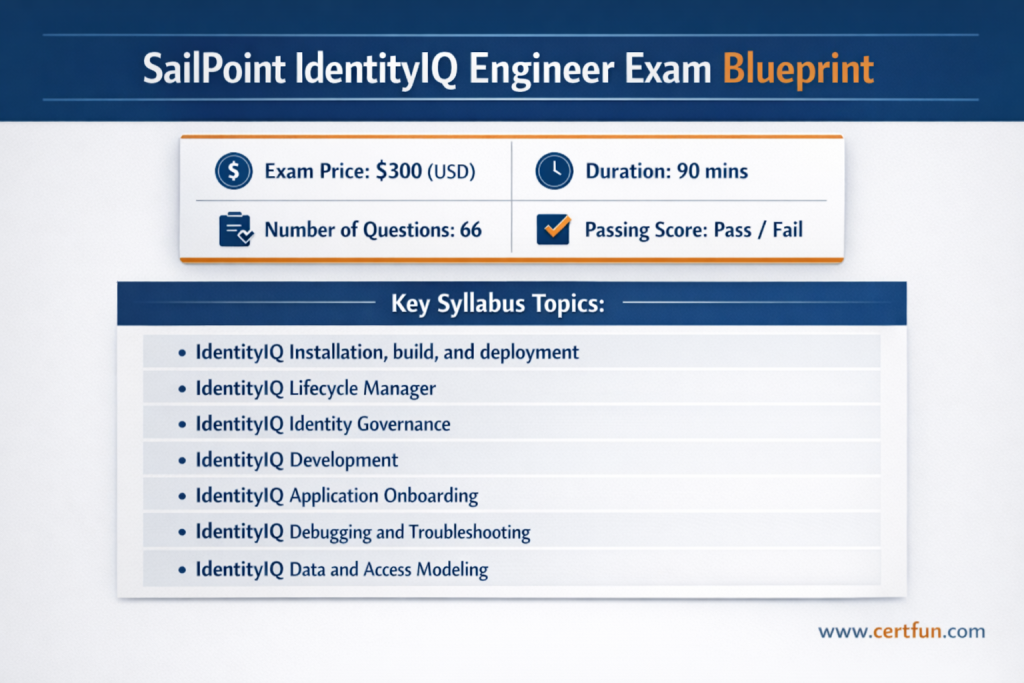
- Exam Name: SailPoint Certified IdentityIQ Engineer
- Exam Code: IdentityIQ Engineer
- Exam Price: $300 (USD)
- Duration: 90 mins
- Number of Questions: 66
- Passing Score: Pass/Fail
Candidates are expected to demonstrate a thorough understanding of the platform’s architecture, core functionalities, and best practices for deployment and management. The time limit and question count necessitate efficient problem-solving and a strong grasp of the material.
Core Competencies: IdentityIQ Engineer Syllabus Areas
The comprehensive syllabus for the SailPoint Certified IdentityIQ Engineer exam covers essential modules and functionalities required for effective IdentityIQ deployment and management. Each section delves into specific technical aspects, ensuring a well-rounded skill set for certified engineers. Professionals should reference the official exam preparation guide for detailed topic outlines.
Implementing IdentityIQ Solutions
This domain focuses on the foundational aspects of setting up and configuring the IdentityIQ environment. It includes understanding the prerequisites, installation procedures, and initial build processes necessary to establish a functional IAM system. Mastering these initial steps is crucial for any successful IdentityIQ deployment.
- IdentityIQ Installation, build, and deployment
Managing Identity Lifecycles and Governance
Engineers must be proficient in managing identities throughout their lifecycle within the organization, from onboarding to offboarding. This involves configuring access requests, approvals, and recertifications to maintain compliance and security. Identity governance ensures that access privileges are consistently aligned with roles and policies.
- IdentityIQ Lifecycle Manager
- IdentityIQ Identity Governance
Developing and Onboarding Applications
A significant part of the engineer’s role involves customizing IdentityIQ to meet specific business requirements and integrating various enterprise applications. This includes developing custom workflows, rules, and connectors, as well as onboarding new applications to bring them under IdentityIQ’s centralized control. Skills in this area are critical for extending the platform’s utility.
- IdentityIQ Development
- IdentityIQ Application Onboarding
Maintaining and Optimizing the Platform
Beyond initial setup, engineers are responsible for the ongoing health and performance of the IdentityIQ system. This involves diagnosing issues, implementing fixes, and optimizing data models and access configurations. Effective debugging and troubleshooting capabilities minimize downtime and enhance system reliability.
- IdentityIQ Debugging and Troubleshooting
- IdentityIQ Data and Access Modeling
Advancing Identity Governance: Key Responsibilities
A SailPoint IdentityIQ Engineer assumes a multifaceted role within an organization, crucial for maintaining a robust and adaptive identity governance framework. These responsibilities span the entire lifecycle of an IAM solution, from architectural design to operational support. Their work directly impacts an organization’s security posture and compliance adherence.
The daily tasks of an IdentityIQ Engineer typically involve hands-on configuration, scripting, and integration efforts. They serve as the technical backbone, translating business requirements into functional IAM policies and processes. Collaborating with security teams, application owners, and auditors is also a common part of their role, ensuring all stakeholders’ needs are met.
- System Design and Architecture: Contributing to the architectural design and implementation of IdentityIQ solutions, ensuring scalability, security, and integration with existing enterprise systems.
- Customization and Development: Developing custom workflows, rules, and connectors using Java, BeanShell, and other relevant scripting languages to meet unique organizational requirements.
- Application Integration: Onboarding new applications into IdentityIQ, configuring connectors, and ensuring seamless provisioning and de-provisioning of user access.
- Lifecycle Management: Implementing and managing identity lifecycle processes, including joiner, mover, and leaver scenarios, to automate user provisioning and de-provisioning.
- Access Governance: Configuring access certifications, role management, and policy enforcement to maintain least privilege access and ensure compliance.
- Troubleshooting and Support: Diagnosing and resolving complex technical issues related to IdentityIQ, providing expert support to end-users and administrators.
These responsibilities highlight the blend of technical prowess and problem-solving skills expected from a certified professional. For a deeper dive into community-driven solutions and discussions, professionals often explore platforms like the SailPoint Community forums or specialized groups on Reddit.
Strategic Preparation for the IdentityIQ Engineer Exam
Effective preparation for the SailPoint IdentityIQ Engineer exam demands a structured approach, combining official resources, hands-on practice, and a clear understanding of the exam’s objectives. Random study or reliance on unofficial materials can often lead to gaps in knowledge, particularly in practical application.
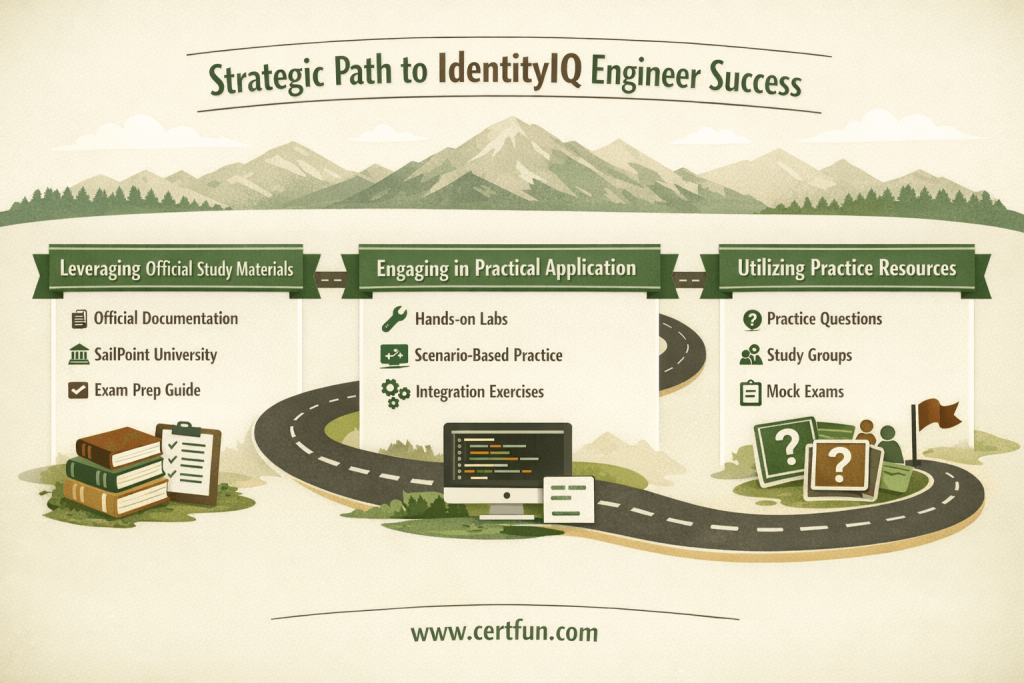
Leveraging Official Study Materials
SailPoint provides official documentation and guides that are indispensable for exam preparation. These resources often align directly with the exam topics and offer the most accurate and up-to-date information. Candidates should prioritize these materials to ensure their study efforts are well-directed.
- Official Documentation: Thoroughly review the IdentityIQ Administrator Guide, Developer Guide, and Release Notes.
- SailPoint University: Explore courses and learning paths offered by SailPoint University, which are specifically designed to cover certification objectives.
- Exam Prep Guide: Utilize the SailPoint Certified IdentityIQ Engineer Exam Prep Guide as your primary roadmap for study.
Engaging in Practical Application
Theory alone is insufficient for this engineering-focused certification. Practical experience with IdentityIQ is paramount. Setting up a lab environment, experimenting with configurations, and solving real-world scenarios will solidify understanding and build confidence. Candidates should seek opportunities to work on actual IdentityIQ projects or simulations.
- Hands-on Labs: Practice installing, configuring, and troubleshooting IdentityIQ in a sandbox environment.
- Scenario-Based Practice: Work through common IAM use cases, such as onboarding applications, creating custom rules, and running access certifications.
- Integration Exercises: Practice integrating IdentityIQ with various target systems and directories.
Utilizing Practice Resources
To gauge readiness and identify areas for improvement, engaging with practice questions is highly beneficial. These resources simulate the exam environment and help familiarize candidates with the question formats and time constraints. While avoiding “dumps” is crucial for ethical and effective learning, quality practice questions are an excellent tool.
- Practice Questions: Seek out reputable platforms offering SailPoint IdentityIQ Engineer practice questions to test your knowledge and identify weak points.
- Study Groups: Participate in study groups or online forums to discuss concepts and share insights with peers.
- Mock Exams: Take full-length mock exams to simulate the actual test environment and refine time management skills. For comprehensive preparation and realistic exam simulation, consider exploring resources from providers such as Certfun.
Career Trajectories for Certified SailPoint Professionals
A SailPoint Certified IdentityIQ Engineer certification significantly enhances career prospects within the rapidly expanding cybersecurity and identity management sectors. This credential opens doors to advanced roles and leadership opportunities, distinguishing certified professionals in a competitive market. The demand for skilled IAM practitioners continues to grow, driven by stringent regulatory compliance and an evolving threat landscape.
Certified individuals are highly sought after by organizations across various industries, including finance, healthcare, government, and technology. They play critical roles in safeguarding sensitive data, managing user access efficiently, and ensuring operational continuity. The financial benefits, such as a competitive SailPoint IdentityIQ Engineer salary, are also a compelling factor for pursuing this certification.
- Identity and Access Management Engineer: Core role focusing on the design, implementation, and maintenance of IAM solutions.
- IAM Consultant: Advising clients on best practices for identity governance, deploying SailPoint solutions, and providing expert guidance.
- Security Architect: Integrating IAM principles into broader enterprise security architectures, ensuring holistic protection.
- Identity Governance Administrator: Managing day-to-day operations of the IdentityIQ platform, including user provisioning, access requests, and compliance reporting.
- Technical Lead/Manager: Leading teams of IAM engineers, overseeing projects, and driving strategic IAM initiatives.
The certification provides a clear path for professional development, allowing engineers to specialize further or move into management positions. Keeping abreast of industry trends and platform updates through continuous learning is also key to sustaining a rewarding career path.
Operational Excellence Through SailPoint IdentityIQ Development
The development aspect of the SailPoint IdentityIQ Engineer role is fundamental to tailoring the platform to an organization’s specific, often complex, operational needs. Generic out-of-the-box configurations rarely suffice for dynamic enterprise environments, making customization and intelligent development crucial. This area focuses on extending IdentityIQ’s capabilities through scripting, API integrations, and bespoke solution building.
Engineers skilled in development can create custom connectors for niche applications, implement advanced business logic through rules and workflows, and automate identity processes that are unique to their organization. This not only enhances efficiency but also ensures higher fidelity in access governance, reducing manual errors and improving audit readiness. Utilizing resources such as the SailPoint GitHub OSS repository can provide valuable insights and code examples for development tasks.
Customizing with Rules and Workflows
IdentityIQ’s rule engine and workflow capabilities are powerful tools for an engineer. Mastering them allows for the creation of intricate logic to govern access, approvals, and identity transformations. This ensures that the platform adapts precisely to an organization’s policies and operational procedures.
- Designing and implementing custom rules for various IdentityIQ components, such as provisioning, correlation, and policy violations.
- Developing and modifying workflows to automate business processes, including access requests, certification campaigns, and lifecycle events.
- Understanding the SailPoint API and its application in extending IdentityIQ functionalities and integrating with external systems.
Integrating Diverse Application Ecosystems
Modern enterprises operate with a diverse array of applications, both on-premises and in the cloud. The ability to seamlessly onboard and manage identities across these varied systems is a core competency. This involves understanding different connector types, data mappings, and synchronization strategies.
- Configuring standard and custom connectors for various applications, databases, and directories.
- Managing data mappings and transformations to ensure consistent identity attributes across connected systems.
- Troubleshooting connectivity issues and data synchronization failures between IdentityIQ and target applications.
Addressing Implementation Challenges: Debugging and Troubleshooting
Even the most meticulously designed IdentityIQ implementations can encounter unexpected issues, making robust debugging and troubleshooting skills indispensable for an IdentityIQ Engineer. The complexity of IAM environments, coupled with integrations across numerous systems, necessitates a systematic approach to problem resolution. Effective troubleshooting minimizes downtime, maintains system integrity, and ensures uninterrupted identity governance processes.
Engineers must be adept at interpreting logs, tracing workflows, and diagnosing configuration discrepancies. This proactive and reactive capability prevents minor glitches from escalating into significant security or operational disruptions. The ability to quickly identify root causes and implement lasting solutions is a hallmark of an experienced SailPoint IdentityIQ Engineer.
Diagnostic Strategies and Tools
A variety of tools and methodologies are at an engineer’s disposal for pinpointing issues within IdentityIQ. Understanding when and how to apply each diagnostic technique is crucial for efficient problem-solving. This includes leveraging built-in logging, monitoring tools, and understanding system behavior under different conditions.
- Utilizing IdentityIQ’s extensive logging mechanisms to identify errors, warnings, and performance bottlenecks.
- Tracing execution paths for rules and workflows to understand where and why issues are occurring.
- Employing database queries and external tools to validate data integrity and system state.
Resolving Common IdentityIQ Issues
Engineers often face recurring challenges related to connectivity, provisioning failures, or policy violations. Proficiency in quickly resolving these common problems is essential for maintaining system health and user satisfaction. This requires a deep understanding of IdentityIQ’s internal processes and common pitfalls.
- Diagnosing and resolving connector issues, including authentication failures, schema mismatches, and data reconciliation problems.
- Troubleshooting provisioning errors, such as attribute mismatches, invalid accounts, and unexpected access changes.
- Addressing performance issues related to database queries, rule execution, and large data imports.
For visual learners and quick troubleshooting tips, the SailPoint Technologies YouTube channel often provides valuable tutorials and demonstrations. This ongoing learning helps engineers stay current with best practices and solution strategies.
Securing Future Identity Landscapes with IdentityIQ
As digital transformations accelerate, the demand for sophisticated identity management solutions grows exponentially. The SailPoint IdentityIQ Engineer plays a crucial role in securing these evolving identity landscapes, positioning organizations for future challenges and opportunities. Their expertise ensures that identity governance remains agile, compliant, and highly secure against emerging threats.
The certification empowers professionals to not only manage current IAM infrastructures but also to anticipate and adapt to future trends, such as increased cloud adoption, zero-trust architectures, and advanced analytics for anomaly detection. This forward-thinking approach makes the IdentityIQ Engineer an invaluable asset in any organization’s long-term security strategy. The benefits of SailPoint IdentityIQ Engineer certification extend beyond technical skills, encompassing strategic vision for identity security.
- Proactive Risk Mitigation: Implementing robust access controls and continuous monitoring to prevent unauthorized access and data breaches.
- Compliance Assurance: Ensuring that identity policies and processes meet stringent regulatory requirements (e.g., GDPR, HIPAA, SOX).
- Operational Efficiency: Automating identity lifecycle processes to reduce manual effort, minimize errors, and improve overall productivity.
- Enhanced User Experience: Providing seamless and secure access to resources for employees, partners, and customers.
- Strategic IAM Planning: Contributing to the long-term vision and roadmap for identity governance, aligning technology with business objectives.
The continuous evolution of IdentityIQ, complemented by community insights found on platforms like LinkedIn’s product pages for SailPoint, underscores the dynamic nature of this field. Certified engineers are thus equipped not just for today’s challenges but also for shaping the secure digital future.
Conclusion
The SailPoint Certified IdentityIQ Engineer certification is more than a credential; it is a commitment to excellence in the critical field of identity and access management. For IT professionals, it represents a significant step towards mastering a platform essential for enterprise security and compliance in a world of complex digital identities. The expertise gained through this certification not only future-proofs an individual’s career but also equips organizations with the talent needed to navigate the ever-evolving threat landscape successfully.
Investing in this certification means embracing a role at the forefront of digital security, where technical prowess meets strategic insight. By validating a comprehensive skill set in deployment, development, and governance, certified engineers are poised to drive secure and efficient identity solutions that are vital for business resilience and growth. Embark on your journey to becoming a SailPoint IdentityIQ Engineer and contribute to securing the digital future.
Ready to validate your expertise and advance your career in Identity and Access Management? Explore comprehensive study materials and practice questions to prepare effectively for your SailPoint IdentityIQ Engineer certification. Begin your preparation for success today.
Frequently Asked Questions
1. What is the SailPoint IdentityIQ Engineer certification?
The SailPoint IdentityIQ Engineer certification validates a professional’s expertise in installing, configuring, developing, and managing SailPoint IdentityIQ solutions for enterprise identity governance.
2. What are the prerequisites for the IdentityIQ Engineer exam?
While there are no formal prerequisites, candidates are typically expected to have hands-on experience with IdentityIQ and a strong understanding of IAM concepts, often gained through SailPoint IdentityIQ training courses.
3. How long is the SailPoint IdentityIQ Engineer exam?
The exam duration for the SailPoint IdentityIQ Engineer certification is 90 minutes.
4. What are the career benefits of this certification?
Benefits include enhanced career opportunities, higher earning potential (SailPoint IdentityIQ Engineer salary), validation of specialized skills, and increased credibility within the cybersecurity and IAM industries.
5. How should I prepare for the IdentityIQ Engineer exam?
Effective preparation involves reviewing official SailPoint documentation, engaging in hands-on practice, and utilizing quality SailPoint IdentityIQ Engineer practice questions to assess readiness and reinforce learning.


