The Huawei Certified ICT Expert-openGauss (H14-331) certification serves as a critical benchmark for IT professionals seeking to validate their advanced expertise in openGauss database administration, optimization, and management. This expert-level credential, known by its exam code H14-331, is designed for senior database engineers, administrators, and architects who manage complex openGauss environments. This article provides an essential alert regarding recent shifts in the H14-331 certification exam, offering a timely overview of the updated structure, syllabus, and preparation strategies crucial for success. Professionals aiming to achieve the Huawei Certified ICT Expert-openGauss designation will find comprehensive insights into mastering this evolving landscape and understanding what the H14-331 certification entails.
Decoding the H14-331 Exam Framework
Understanding the foundational aspects of the Huawei Certified ICT Expert-openGauss exam is the first step toward effective preparation. The H14-331 assessment evaluates a candidate’s profound knowledge and practical skills required to manage and maintain openGauss databases at an expert level. This intensive examination is structured to ensure that certified individuals possess the capabilities needed to handle high-stakes database operations and performance challenges.
The key details for the H14-331 exam are as follows:
- Exam Name: Huawei Certified ICT Expert-openGauss
- Exam Code: H14-331
- Exam Price: $300 (USD)
- Duration: 90 minutes
- Number of Questions: 60
- Passing Score: 600 out of 1000
These parameters define the rigor and scope of the assessment, emphasizing both breadth of knowledge and the ability to apply expert-level solutions under time constraints. For official details and to verify exam information directly from the vendor, candidates should always consult the official certification pathway.
Core openGauss Domains for Expert Certification
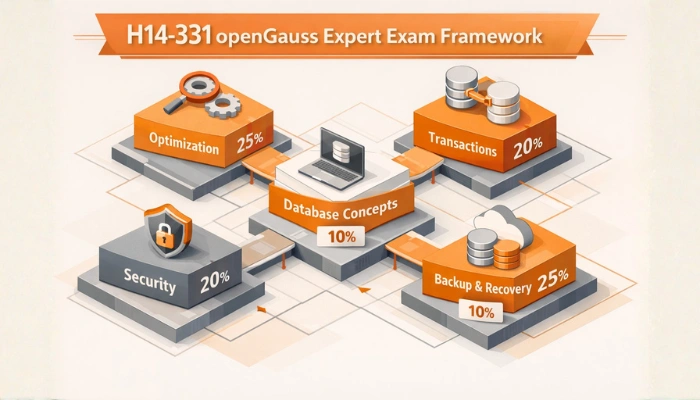
The H14-331 exam syllabus is meticulously designed to cover critical areas of openGauss database technology, reflecting the multifaceted responsibilities of an expert-level administrator. Each domain is weighted to indicate its importance in the overall assessment, guiding candidates to prioritize their study efforts. A comprehensive understanding of these topics is essential for any professional aspiring to the Huawei Certified ICT Expert-openGauss status. For a more granular view, candidates can review the comprehensive syllabus details.
Managing Transactions and Lock Mechanisms (14%)
This section delves into the intricate world of transaction processing within openGauss, a cornerstone of database integrity and concurrency control. Expert candidates must demonstrate a deep understanding of ACID properties, various isolation levels, and how they impact data consistency and application performance. The focus extends to openGauss’s specific lock mechanisms, including row-level, table-level, and global locks, as well as strategies for preventing and resolving deadlocks. Proficiency here ensures the ability to design and manage systems that are both robust and highly available, critical for enterprise-grade applications relying on complex data interactions.
Ensuring Storage and Log Management (13%)
Effective storage and log management are vital for openGauss database resilience and recovery. This domain assesses a candidate’s ability to configure and manage storage structures, including tablespaces, data files, and indexing strategies. Equally important is the understanding of openGauss’s write-ahead logging (WAL) system, including log file management, archiving, and their role in ensuring data durability and crash recovery. Expertise in these areas is crucial for maintaining system uptime and ensuring that data can be reliably restored after any unforeseen event.
Optimizing the SQL Engine (10%)
The SQL engine is at the heart of how openGauss processes queries, and this domain focuses on its architecture and performance tuning. Candidates need to comprehend how the optimizer chooses execution plans, the impact of various SQL constructs on performance, and techniques for writing efficient queries. This includes understanding statistics, indexing strategies, and using tools to analyze and improve query execution. A strong grasp of SQL engine optimization allows experts to significantly enhance the responsiveness and throughput of openGauss-based applications.
Handling Database Object Management and SQL Syntax (5%)
While a smaller percentage, a solid understanding of database object management and advanced SQL syntax is fundamental. This covers the creation, modification, and deletion of various database objects like tables, views, sequences, and stored procedures. Candidates should be proficient in complex SQL queries, including joins, subqueries, and window functions, as well as data manipulation language (DML) and data definition language (DDL) operations. This foundational knowledge underpins all other advanced database administration tasks and complex data retrieval operations.
Mastering Backup, Restoration, and Disaster Recovery (5%)
Data protection is paramount, and this section tests expertise in openGauss backup, restoration, and disaster recovery strategies. Topics include physical and logical backups, point-in-time recovery, and setting up high-availability solutions. Candidates must be able to design and implement robust disaster recovery plans to minimize data loss and downtime in the event of system failures. This domain directly relates to ensuring business continuity and meeting critical RTO (Recovery Time Objective) and RPO (Recovery Point Objective) requirements.
Elevating Database Optimization (20%)
Database optimization is the largest single component of the H14-331 exam, reflecting its importance in real-world openGauss environments. This extensive domain encompasses a wide range of techniques for improving database performance, from query tuning and index optimization to system parameter tuning and hardware resource management. Experts must diagnose performance bottlenecks, apply appropriate optimization strategies, and monitor system health using various tools. This segment is critical for maintaining high-performing, scalable database systems that meet evolving business demands.
Exploring Advanced openGauss Features (13%)
openGauss offers a rich set of advanced features that enhance its capabilities for enterprise applications. This domain explores topics such as advanced replication methods, distributed database concepts, and specialized data types or extensions. Candidates are expected to understand how to deploy and leverage these features to build more sophisticated and scalable database solutions. This demonstrates a candidate’s ability to utilize openGauss’s full potential beyond basic administration.
Executing Routine Database Management (4%)
Even at an expert level, routine tasks form the backbone of database operations. This section covers essential daily, weekly, and monthly maintenance procedures, including space management, object maintenance, and routine health checks. While a smaller weight, neglecting these tasks can lead to significant issues, making proficiency in efficient and automated routine management crucial for stable database operations.
Securing Database Management (6%)
Database security is a non-negotiable aspect of any enterprise system. This domain assesses knowledge of openGauss security features, including user and role management, privilege control, auditing, and data encryption. Expert candidates must be able to implement robust security policies, identify vulnerabilities, and ensure compliance with security best practices. Protecting sensitive data from unauthorized access and maintaining data integrity are key outcomes for professionals in this area.
Addressing Troubleshooting Scenarios (10%)
The ability to quickly and effectively troubleshoot issues is a hallmark of an expert database administrator. This section focuses on diagnosing and resolving common openGauss problems, including performance issues, connectivity errors, and system failures. Candidates should be proficient in using openGauss diagnostic tools, analyzing log files, and implementing corrective actions under pressure. This practical skill ensures that expert openGauss professionals can maintain operational stability and minimize downtime.
Cultivating openGauss Expertise for Real-World Challenges
Achieving the H14-331 certification proves more than theoretical knowledge. It validates a professional’s ability to apply advanced openGauss skills in real-world scenarios. Certified professionals can make complex database architecture decisions, fix performance bottlenecks, and design highly available and secure openGauss environments.
The skills validated by the Huawei Certified ICT Expert-openGauss certification include:
- Designing and implementing robust openGauss database architectures.
- Performing advanced performance tuning and optimization for large-scale databases.
- Developing and executing comprehensive backup, recovery, and disaster recovery plans.
- Ensuring high availability and data integrity through replication and clustering techniques.
- Implementing stringent database security measures and auditing policies.
- Troubleshooting complex database issues efficiently and effectively.
- Managing advanced openGauss features for enhanced scalability and functionality.
These capabilities empower certified experts to contribute significantly to strategic IT initiatives, drive innovation, and ensure the reliability of mission-critical data platforms.
Strategic Preparation for H14-331 Success
Effective preparation for the H14-331 exam demands a structured and comprehensive approach, moving beyond surface-level understanding to deep practical application. Candidates should develop a study plan that covers all syllabus domains thoroughly, allocating time based on their existing knowledge and the specified topic weightages. Incorporating hands-on practice with openGauss is indispensable, as the expert-level certification emphasizes practical problem-solving. Reviewing valuable sample questions can also help familiarize candidates with the exam format and question types.
Building a Robust Study Plan
A successful study strategy begins with a detailed plan. Identify areas of strength and weakness across the H14-331 syllabus. Dedicate more time to high-weightage topics like “Database optimization” and “Transaction management,” ensuring a solid grasp of complex concepts. Leverage official Huawei training materials, documentation, and community forums. Consistent study over several weeks or months is more effective than cramming, allowing for better retention and deeper understanding.
Practical Skill Development
Theoretical knowledge must be complemented by practical experience. Set up a local openGauss instance or use cloud-based labs to practice administration tasks, SQL optimization, backup/recovery procedures, and security configurations. Experiment with different scenarios to solidify understanding of how concepts translate into real-world solutions. This hands-on experience is vital for tackling the practical application-oriented questions prevalent in expert-level exams.
Honing Exam Readiness
Beyond studying, preparing for the exam environment itself is crucial. Practice with timed mock tests to improve pacing and test-taking skills. This helps in managing the 90-minute duration and 60 questions effectively, simulating the actual exam pressure. While relying on “exam dumps” is detrimental to genuine learning and ethical certification, utilizing legitimate practice tests can identify knowledge gaps and build confidence for the comprehensive H14-331 exampreparation. For registration and scheduling, candidates can find exam scheduling options through authorized test centers. Additionally, exploring Huawei learning resources can offer further support.
Maximizing Your Investment in openGauss Credentialing
Investing time and resources into achieving the Huawei Certified ICT Expert-openGauss H14-331 certification yields substantial returns for an IT professional’s career trajectory. This credential is a powerful testament to advanced database expertise, setting individuals apart in a competitive job market. It not only validates a high level of technical proficiency but also signals a commitment to continuous learning and professional development, qualities highly valued by employers globally.
The benefits of holding the H14-331 certification extend across various dimensions:
- Enhanced Career Opportunities: Certified experts are often preferred for senior database administrator, architect, and consultant roles, opening doors to more challenging and rewarding positions.
- Increased Earning Potential: The specialized nature of openGauss expertise, combined with expert-level validation, typically translates into higher salary prospects compared to uncertified peers.
- Industry Recognition: Huawei is a leading global ICT provider, and its certifications are recognized for their rigor and relevance, providing a respected badge of honor within the industry.
- Demonstrated Expertise: The H14-331 proves a candidate’s ability to handle complex openGauss environments, troubleshoot intricate issues, and optimize database performance effectively.
- Contribution to Business Value: Certified professionals can directly impact an organization’s success by ensuring reliable, secure, and high-performing database systems, which are foundational to modern digital services.
This expert certification path solidifies your position as a valuable asset in any organization leveraging openGauss, driving both personal growth and organizational success.
Staying Current with openGauss Evolutions
The world of database technology is constantly evolving, and openGauss is no exception. Maintaining the Huawei Certified ICT Expert-openGauss H14-331 credential requires a commitment to continuous learning and staying updated with the latest openGauss features, updates, and best practices. This ensures that an expert’s knowledge remains relevant and their skills continue to meet the demands of emerging technologies and complex enterprise environments. Proactive engagement with the openGauss community, attending webinars, and reviewing official documentation are essential practices for any certified professional. This ongoing dedication not only preserves the value of the certification but also positions the individual as a thought leader in the openGauss ecosystem.
Conclusion:
The Huawei Certified ICT Expert-openGauss (H14-331) certification represents a significant achievement for professionals dedicated to mastering openGauss database technology. With recent updates, preparing for the exam with a clear strategy is more important than ever. Understanding the updated syllabus, focusing on practical skills, and using the right study resources can help candidates prepare effectively. Candidates can then pursue this challenging but rewarding certification with confidence.
Take the proactive step today to secure your expert status in openGauss database administration. Begin your journey toward the Huawei Certified ICT Expert-openGauss certification by exploring comprehensive preparation options and official study materials. Elevate your expertise and validate your skills to meet the demands of modern data management by visiting reputable platforms to explore Huawei certifications and resources designed for your success.
Frequently Asked Questions
Q. What is the passing score for the H14-331 exam?
A. Candidates must achieve a score of 600 out of 1000 to pass the H14-331 Huawei Certified ICT Expert-openGauss exam.
Q. How long is the H14-331 exam duration?
A. The H14-331 exam is designed to be completed within 90 minutes, requiring efficient time management from test-takers.
Q. What are the primary benefits of earning the Huawei Certified ICT Expert-openGauss certification?
A. Earning this certification validates advanced skills in openGauss, enhancing career opportunities, increasing earning potential, and providing industry recognition as an expert in database administration.
Q. Should I use exam dumps for H14-331 preparation?
A. No, using exam dumps is strongly discouraged. Ethical preparation with official study guides, hands-on practice, and legitimate practice tests ensures genuine skill development and long-term career value.
Q. Where can I find official resources for H14-331 exam preparation?
A. Official preparation resources, including detailed syllabus and training information, can typically be found on the Huawei official talent website and through authorized training partners.


