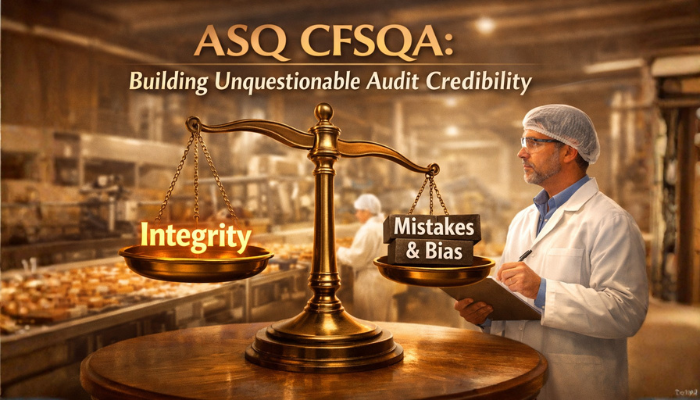
The ASQ Certified Food Safety and Quality Auditor (CFSQA) certification validates a professional’s expertise in auditing food safety and quality management systems against international standards. This rigorous credential, offered by ASQ under the exam code CFSQA, signifies a deep understanding of HACCP principles, food safety management, and auditing best practices. Achieving the CFSQA demonstrates a commitment to upholding the highest integrity in food safety auditing, a critical function in protecting public health and ensuring consumer confidence. It empowers auditors to critically assess compliance, identify potential hazards, and recommend robust corrective actions across the complex food supply chain. This article identifies common pitfalls that can undermine an auditor’s credibility and offers guiding principles to maintain professional excellence, ensuring that every ASQ Certified Food Safety and Quality Auditor can perform their role with maximum impact and trust.
Understanding the ASQ CFSQA Credential Details
The ASQ Certified Food Safety and Quality Auditor certification is specifically designed for professionals who evaluate food safety and quality systems. Candidates seeking this esteemed credential commit to a structured examination process that comprehensively assesses their knowledge and application of relevant principles. Successfully earning the CFSQA validates an auditor’s capability to identify deficiencies, interpret complex regulatory requirements, and drive improvements within food supply chains, which is essential for both regulatory compliance and operational excellence. Understanding the examination’s structure is a foundational step in effective preparation.
The examination for the ASQ CFSQA requires a significant time commitment, providing candidates with a total appointment time of 270 minutes, which includes 258 minutes of actual exam time. This duration allows ample opportunity to consider each question thoroughly. The exam consists of 145 questions, meticulously designed to test a candidate’s comprehensive understanding across the subject matter. To pass this challenging assessment and achieve certification, aspirants must achieve a minimum score of 550 out of a possible 750 points.
The financial commitments for pursuing the certification vary based on membership status with ASQ, reflecting different tiers of investment:
- ASQ Members: The exam price is $450, a benefit for those actively involved with the organization.
- Non-Members: The exam price is $550, reflecting the full cost for professionals outside the ASQ membership.
- Retakes: Should a candidate need to retest, a reduced fee of $350 applies, offering a more accessible path to certification.
These detailed parameters are crucial for any professional planning their CFSQA preparation strategy, helping them understand the logistical and financial investment involved in pursuing this esteemed and career-enhancing certification. Awareness of these factors allows for better planning and allocation of resources.
Navigating the ASQ CFSQA Core Competencies
The ASQ CFSQA certification requires a comprehensive grasp of several key domains, collectively forming the official body of knowledge that underpins effective food safety and quality auditing. These areas ensure that certified auditors possess the necessary theoretical understanding and practical skills to perform their duties with precision and authority. A thorough review of these topics is indispensable for candidates aiming to pass the ASQ CFSQA exam and excel in their auditing roles, as they represent the fundamental pillars of the profession.
Examining Key Knowledge Areas for Auditors
The ASQ CFSQA syllabus covers a broad spectrum of topics essential for any competent food safety and quality auditor. These topics range from foundational concepts of foodborne hazards to the intricate processes of auditing and quality improvement, providing a holistic view of the field. Developing profound expertise in each area is paramount for maintaining credibility and ensuring the auditor can navigate complex scenarios effectively.
1. Food Safety and HACCP System:
This domain covers fundamental concepts of identifying foodborne hazards (biological, chemical, physical), understanding preventive controls, and establishing the overall structure of a robust food safety management system. It sets the stage for understanding why certain controls are necessary.
• Food Safety and HACCP Management: Focuses on the administrative and operational aspects of maintaining a robust food safety program, including developing effective policies, establishing clear procedures, and defining the roles and responsibilities within a food organization. This ensures a systematic approach to food safety.
2. HACCP Principles:
Dives deep into the seven universally recognized principles of HACCP (Hazard Analysis and Critical Control Points), which form the backbone of modern food safety systems. Understanding these principles is critical for designing and auditing effective control measures.
3. Implementation and Maintenance of Food Safety and HACCP System:
Explores the practical steps involved in setting up, verifying, validating, and continuously improving a food safety system within an organization. This includes corrective actions, record-keeping, and management review processes. For detailed insights into the official standards, refer to the ASQ official certification details.
4. Auditing Fundamentals:
Covers the basic principles and techniques of auditing, including audit planning, effective communication during an audit, data collection methods, and the structure of audit reporting in a food safety context. This lays the groundwork for practical auditing.
5. Auditing Process and Auditor Competencies:
Addresses the step-by-step methodology of conducting an audit, emphasizing the essential skills, ethical considerations, and professional responsibilities required of a competent food safety auditor. It delves into interview techniques, evidence collection, and non-conformity identification.
6. Quality Tools and Techniques:
Introduces various analytical and problem-solving tools used to identify root causes of issues, monitor process performance, and drive continuous improvement initiatives in both quality and safety aspects. This equips auditors with analytical firepower.
Avoiding Auditor Credibility Traps
Maintaining credibility is paramount for any food safety and quality auditor, especially those holding the ASQ CFSQA certification, as their findings directly impact public trust and organizational compliance. A lapse in professional conduct or judgment can quickly undermine trust, compromise the effectiveness of an audit, and damage the auditor’s reputation. Auditors must actively identify and circumvent common mistakes that can erode their standing and the integrity of the entire auditing process, ensuring their assessments are always beyond reproach.
Compromising Independence and Objectivity
One of the most critical aspects of effective auditing is maintaining unwavering independence and objectivity. Auditors who fail to uphold these fundamental principles risk delivering biased findings, which can lead to a severe loss of trust from all stakeholders, including regulatory bodies and consumers. This often occurs when personal relationships, financial interests, or preconceived notions unconsciously influence audit outcomes, leading to a distorted and unreliable view of the audited system’s actual status.
CFSQA certified auditors must consciously distance themselves from any situation that could create a conflict of interest, real or perceived. This includes strict adherence to policies such as refusing gifts, avoiding auditing areas where they have previously worked or consulted extensively, and rigorously ensuring that personal opinions or past experiences do not sway their professional judgment. Failing to proactively identify and report potential conflicts of interest is a direct and swift route to losing credibility, ultimately jeopardizing the validity of their audit reports and the safety standards they are meant to uphold.
Inadequate Preparation and Lack of Detail
An auditor’s effectiveness heavily relies on thorough and meticulous preparation before any engagement. Arriving at an audit without a clear, comprehensive understanding of the auditee’s specific processes, all relevant regulatory standards, or a detailed review of previous audit findings signals a significant lack of professionalism. This critical oversight often leads to superficial assessments, missed opportunities for identifying underlying systemic issues, and a failure to uncover critical non-conformities that could pose serious risks.
Prior to commencing any audit, an ASQ CFSQA professional must meticulously review all available documentation, thoroughly understand the full scope and objectives of the audit, and prepare a detailed, systematic audit plan. During the audit itself, failing to ask probing, intelligent questions or inadvertently overlooking critical details and evidence can render the entire exercise ineffective and ultimately meaningless. A robust command of the detailed body of knowledge covering food safety regulations and industry-specific standards is absolutely indispensable for conducting a comprehensive and impactful evaluation, ensuring no critical element is overlooked.
Ensuring Ethical Conduct During Food Safety Audits
Ethical conduct forms the absolute bedrock of an auditor’s professional identity, particularly for those entrusted with the significant responsibility of an ASQ CFSQA credential. Upholding unwavering integrity, strict confidentiality, and absolute fairness throughout every stage of the audit process is not merely a best practice but a non-negotiable requirement. Any deviation from these ethical principles can lead to severe repercussions, not only for the individual auditor’s career and reputation but also for the overall credibility of the auditing profession and the safety of the food supply chain itself.
Misrepresenting Findings or Omitting Data
One of the most egregious and professionally damaging errors an auditor can commit is to intentionally misrepresent findings or purposefully omit crucial data from their official reports. This unethical behavior encompasses various actions, such as deliberately downplaying the severity of serious non-conformities, fabricating evidence to fit a narrative, or selectively presenting information in a manner that favors the auditee or conceals problems. Such actions are a direct and profound breach of ethical guidelines and can have dire, far-reaching consequences for public health, safety, and regulatory compliance.
An ASQ Certified Food Safety and Quality Auditor must operate with an unyielding commitment to reporting all observations, evidence, and findings accurately and truthfully, regardless of any potential pressures, implications, or discomfort these findings might cause. Transparency is not merely a virtue but a foundational requirement for effective food safety management and driving genuine continuous improvement. Any manipulation or distortion of audit data not only irrevocably destroys an auditor’s professional credibility but also, more importantly, places consumers at significant risk by masking genuine, critical issues within the food supply chain, which could lead to widespread harm.
Breaching Confidentiality and Impartiality
Auditors are frequently granted access to highly sensitive, proprietary, and confidential information belonging to audited organizations during their engagements. Breaching this confidentiality, whether through carelessly sharing trade secrets, prematurely disclosing audit findings to unauthorized parties, or discussing auditee-specific information in inappropriate forums, constitutes serious professional misconduct. Similarly, failing to maintain absolute impartiality, perhaps by overtly showing favoritism, exhibiting prejudice, or allowing personal biases to influence judgment, profoundly compromises the fundamental integrity and fairness of the entire audit.
CFSQA professionals are stringently expected to maintain the strictest confidentiality and treat all information gathered with the utmost discretion and professionalism. This obligation extends beyond the immediate audit engagement and encompasses all subsequent interactions and communications. Unwavering impartiality ensures that all auditees are treated fairly, consistently, and without bias, and that all audit findings and conclusions are based solely on objective evidence and established criteria. This steadfast commitment reinforces the profound value of continuous career development insights and adherence to rigorous ethical principles in the field of food safety auditing, safeguarding trust and reliability.
Enhancing Auditor Effectiveness with Quality Tools
Leveraging the right quality tools and techniques can significantly enhance an ASQ CFSQA auditor’s ability to not only identify issues but also to effectively analyze root causes and recommend truly impactful corrective actions. Many auditors, however, often fail to fully utilize these powerful resources, relying instead on conventional, less analytical methods that may inadvertently miss deeper systemic problems or emerging trends. Integrating a diverse and appropriate set of analytical tools supports a more robust, insightful, and ultimately effective auditing process, moving beyond simple observation to data-driven conclusions.
Underutilizing Data Analysis and Statistical Methods
Many auditors confine their analysis to superficial observations and anecdotal evidence rather than delving into the underlying quantitative data that can reveal significant insights. Failing to consistently apply statistical methods, conduct thorough trend analysis over time, or perform process capability studies can lead to missed insights regarding recurring issues, critical process variations, or the effectiveness of existing controls. This significant oversight severely limits an auditor’s ability to provide data-driven, evidence-based recommendations that can truly impact food safety and quality outcomes.
A CFSQA professional should be highly proficient in using a range of quality tools, such as Pareto charts to effectively prioritize issues based on their frequency or impact, control charts to monitor process stability and identify out-of-control conditions, and Ishikawa (fishbone) diagrams to systematically explore and visualize root causes of non-conformities. These tools provide a structured and scientific approach to problem-solving and help auditors move beyond merely identifying symptoms to pinpointing core issues within a food safety system. Utilizing these analytical methods ensures that audit findings are not just descriptive but also deeply analytical and actionable, offering measurable and sustainable value propositions to the audited organization.
Neglecting Continuous Improvement in Auditing Practices
The auditing landscape, particularly within the dynamic realm of food safety, is in a state of constant evolution with the introduction of new regulations, advancements in technology, and the emergence of refined best practices. Auditors who do not commit to continuous learning and improvement in their own auditing practices risk becoming outdated, less efficient, and ultimately less effective in their roles. Sticking rigidly to outdated methodologies without adapting to new challenges, standards, or technological advancements is a significant credibility killer, diminishing their value and impact.
ASQ CFSQA auditors should proactively seek out professional development opportunities, regularly attend workshops, webinars, and industry conferences, and diligently stay updated on the latest international industry standards, regulatory changes, and emerging scientific understandings in food safety. This proactive approach ensures that their auditing techniques, knowledge base, and perspectives remain sharp, relevant, and aligned with current best practices. Continuous improvement also involves systematically reflecting on past audit experiences, actively soliciting feedback from auditees and colleagues, and consistently refining personal audit processes to achieve higher levels of efficiency, accuracy, and thoroughness. Embracing structured training programs can further enhance these vital skills, ensuring auditors remain at the forefront of their profession.
Sustaining Professional Growth for CFSQA Auditors
Achieving the ASQ CFSQA certification marks a significant and commendable milestone in a professional’s career, but true excellence in food safety auditing is inherently a journey of continuous, lifelong growth. Auditors who choose to rest on their laurels and fail to adapt to the constantly evolving industry demands, technological advancements, and shifting regulatory landscapes risk progressively diminishing their expertise and overall impact. Sustained professional development ensures that CFSQA-certified individuals remain highly competent, relevant, and at the absolute forefront of food safety and quality assurance, thereby maximizing their long-term career viability and influence.
Ignoring Emerging Technologies and Standards
The modern food industry is increasingly transformed and influenced by new technologies, ranging from advanced sensor systems and artificial intelligence for predictive analysis to blockchain for enhanced traceability and transparent supply chains. Concurrently, new international standards and revised regulatory frameworks are frequently introduced. An auditor who remains unaware of or chooses to ignore these critical developments cannot effectively assess modern, technologically advanced food safety systems. This significant knowledge gap can lead to incomplete audits, inaccurate assessments, or a profound inability to constructively challenge and evaluate advanced operational practices.
CFSQA auditors must actively monitor industry publications, vigorously participate in professional forums, attend specialized seminars, and diligently seek out training on new and emerging technologies, as well as revised and updated standards. Understanding precisely how these innovations impact food production, processing, storage, and distribution is absolutely crucial for conducting relevant, forward-looking, and comprehensive audits that truly reflect the current state of the industry. This proactive approach to learning ensures that an auditor’s skills remain sharp, their perspectives remain current, and their assessments are robust and future-proof.
Failing to Network and Share Knowledge
Professional isolation can prove profoundly detrimental to an auditor’s continuous growth and development. Not actively engaging with peers, failing to attend crucial industry conferences, or neglecting to participate in professional communities significantly limits exposure to diverse perspectives, innovative solutions, and invaluable shared lessons learned from complex real-world scenarios. This often results in a narrow, insular understanding of common industry challenges, emerging risks, and the most effective best practices across the broader food safety landscape.
Networking with other ASQ CFSQA certified professionals, food safety experts, and quality assurance specialists provides invaluable opportunities for essential knowledge exchange, formal or informal mentorship, and collaborative problem-solving. Sharing insights on challenging audit scenarios, discussing novel regulatory interpretations, or debating the effectiveness of new control measures can significantly enhance an auditor’s understanding, refine their judgment, and expand their capabilities. Such active interactions foster a vibrant culture of continuous learning and collective improvement within the auditing community, enabling auditors to adapt and excel collectively.
Ethical Preparation for ASQ CFSQA Certification
Preparing for the ASQ CFSQA exam demands not only rigorous intellectual engagement but also an unyielding commitment to ethical study practices. The integrity of the certification, and ultimately the reliability and trustworthiness of a food safety auditor, rests firmly on a foundation of honest, diligent, and principled preparation. Any shortcuts, unethical practices, or attempts to circumvent genuine learning during exam preparation not only compromise personal integrity but also fundamentally devalue the certification itself, undermining its purpose and significance.
Reliance on Unverified or ‘Dump’ Materials
A common, yet professionally detrimental, mistake that some candidates make is relying on so-called “exam dumps” or unverified, unofficial study materials. These resources often contain outdated, incorrect, or illegally obtained questions and answers, which provide a dangerously false sense of preparedness. Using such materials fundamentally undermines the authentic learning process, prevents a deep understanding of core concepts, and can lead to a fundamental misunderstanding of critical food safety principles. This makes actual exam success unlikely and professional practice in the field fraught with significant risks.
Candidates for the ASQ CFSQA should prioritize utilizing official ASQ resources, highly reputable and peer-reviewed study guides, and legitimate, high-quality practice tests. Engaging exclusively with quality, verified content ensures that knowledge is built upon accurate information, a comprehensive understanding of the official body of knowledge, and a solid ethical foundation. Ethical preparation not only maximizes the chances of passing the exam legitimately but also, crucially, lays a strong and reliable foundation for a credible, effective, and ethically sound career as a food safety and quality auditor, benefiting both the individual and public safety.
Neglecting Hands-on Experience and Practical Application
While theoretical knowledge is undeniably critical for the ASQ CFSQA certification, the examination and the professional role itself heavily emphasize the practical application of auditing principles in real-world food safety and quality scenarios. A significant mistake is focusing solely on rote memorization of facts and figures without actively engaging in practical exercises, analyzing complex case studies, or gaining actual, supervised auditing experience. This creates a dangerous disconnect between theoretical understanding and the essential ability to perform effectively, critically, and confidently in the dynamic and challenging field.
Prospective CFSQA auditors should actively seek out opportunities to apply their learning, such as participating in mock audits, diligently shadowing experienced and certified auditors, or meticulously analyzing real-world food safety incidents and their corrective actions. This practical engagement solidifies theoretical concepts, develops crucial critical thinking skills, enhances problem-solving capabilities, and builds the confidence essential for credible and effective auditing. A balanced approach that seamlessly combines rigorous academic study with meaningful practical application is the undeniable key to comprehensive readiness for both the exam and a successful career. For those seeking effective study materials, resources that integrate practical scenarios and hands-on exercises are highly beneficial and recommended.
Conclusion
The ASQ CFSQA certification is a distinguished and highly valued credential that significantly elevates the standards of food safety and quality auditing. However, the true, enduring value and impact of this certification are ultimately upheld by the auditor’s unwavering commitment to the highest levels of professionalism, uncompromised ethics, and relentless continuous learning. Avoiding the array of credibility killers discussed throughout this article such as compromising objectivity, conducting inadequate preparation, misrepresenting critical findings, underutilizing essential quality tools, and neglecting continuous professional development is absolutely essential for sustained success and meaningful impact in this critical field.
Embrace a comprehensive journey of diligent preparation, unwavering ethical conduct, and lifelong learning to not only successfully pass the challenging ASQ CFSQA exam but also to excel as a trusted, influential, and exceptionally effective food safety and quality auditor. Invest wisely in your professional development by diligently utilizing official study resources, engaging with quality practice questions, and continually refining your practical skills. For those serious about achieving this prestigious credential and building a reputable career, exploring comprehensive preparation tools can provide the competitive edge needed to succeed and maintain excellence. Discover expert preparation tools designed to support your CFSQA journey.


