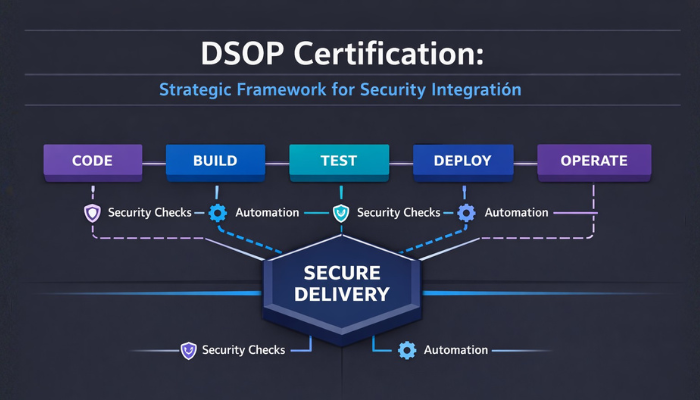
The DevOps Institute DevSecOps Practitioner (DSOP) certification stands as a vital credential for professionals seeking to embed security practices into every stage of the DevOps lifecycle. This certification from the DevOps Institute validates a practitioner’s ability to integrate robust security controls, automate compliance, and foster a culture of shared responsibility across development and operations teams. Aimed at developers, operations professionals, security specialists, and anyone keen to bridge the gap between security and speed, the DSOP empowers individuals to drive secure software delivery. This article explores the profound career growth and value impact associated with achieving the DevOps Institute DSOP, offering insights into its significance in the evolving technology landscape.
Elevating DevSecOps Competence with DSOP
The DevOps Institute DSOP equips individuals with the essential knowledge and practical skills required to implement DevSecOps principles effectively. It moves beyond theoretical understanding, focusing on the practitioner’s ability to apply security measures early and continuously. Professionals holding this certification demonstrate a commitment to building secure by design, shifting security left in the software development process. This proactive approach significantly reduces vulnerabilities and improves the overall resilience of applications and infrastructure.
The certification fosters a deeper understanding of how traditional security models evolve within an agile and automated environment. It highlights the importance of collaboration between historically siloed teams, promoting a holistic view of security that supports rapid innovation. By becoming a certified DevSecOps Practitioner, individuals signify their readiness to tackle complex security challenges in fast-paced development cycles. Practitioners building the wider delivery picture often add the DevOps Master credential.
Integrating Security Across the Software Lifecycle
Achieving the DevOps Institute DSOP confirms a professional’s proficiency in weaving security into every phase of the software delivery pipeline. This includes securing code, infrastructure, and deployment processes, ensuring that security is not an afterthought but an intrinsic part of the development workflow. From initial design and coding to testing, deployment, and ongoing operations, the DevSecOps Practitioner champions secure practices. This comprehensive integration helps organizations deliver secure, high-quality software at speed, reducing the risk of breaches and compliance failures.
Why the DevOps Institute DSOP Shapes Modern Tech Careers
In an era where cyber threats are constantly evolving and the demand for rapid software delivery intensifies, the DevOps Institute DSOP offers a distinctive career advantage. It positions professionals as invaluable assets capable of addressing critical security and operational challenges simultaneously. This certification goes beyond merely demonstrating technical skill; it signifies a strategic mindset focused on building resilient and compliant systems. Organizations increasingly seek talent that can not only accelerate development but also safeguard their digital assets.
The DSOP empowers individuals to become catalysts for change within their organizations, advocating for security best practices and driving cultural shifts towards a security-conscious mindset. This leadership potential translates into enhanced career opportunities, from senior engineering roles to specialized DevSecOps consulting positions. Professionals with this credential are seen as critical enablers for secure digital transformation. Professionals who are not yet ready for practitioner level often begin with the DevSecOps Foundation credential, which establishes the vocabulary the DSOP then builds on.
Driving Career Progression with Specialized Expertise
Possessing the DevOps Institute DSOP certification signifies specialized expertise in an area of immense demand. It validates the ability to implement and manage security tools, automate security tasks, and respond to incidents within a dynamic DevOps environment. This specific skill set opens doors to advanced roles that require a deep understanding of both development and security operations.
Professionals can expect to find themselves in roles such as:
- DevSecOps Engineer: Responsible for integrating security into CI/CD pipelines.
- Security Architect: Designing secure systems and application architectures.
- Cloud Security Engineer: Focusing on securing cloud-native applications and infrastructure.
- ‘DevOps Lead/Manager: Guiding teams in adopting secure development practices.
This specialization not only enhances job prospects but also typically leads to higher earning potential, reflecting the critical value these skills bring to organizations. Exploring how this credential can bolster your professional standing can be further understood by reviewing official certification insights from the DevOps Institute official page.
Navigating the Learning Path to DSOP Certification
The journey to achieving the DevOps Institute DevSecOps Practitioner certification involves dedicated study and a strategic approach to mastering its core concepts. While specific exam details were not provided, effective preparation typically focuses on understanding the practical application of DevSecOps principles rather than rote memorization. Candidates should immerse themselves in the curriculum areas, ensuring a solid grasp of how security measures are integrated across the entire software development lifecycle. This involves hands-on experience and a conceptual understanding of tools and processes.
Essential Preparation Strategies for Success
Successful candidates for the DevOps Institute DSOP often adopt a multi-faceted preparation strategy. This includes formal training, self-study, and practical application of learned concepts.
- Structured Training Programs: Consider enrolling in official or accredited DevSecOps training courses that align with the certification objectives. These programs often provide structured content and expert guidance.
- Hands-on Experience: Apply DevSecOps principles in real-world scenarios or personal projects. Experiment with security automation tools, static and dynamic analysis, and infrastructure as code security.
- Study Groups and Community Engagement: Collaborate with peers, participate in online forums, and leverage communities focused on DevSecOps. Sharing knowledge and discussing complex topics can enhance understanding.
- Regular Practice: Consistently review key concepts and practice scenarios that test your understanding of security integration, compliance, and incident response within a DevOps context.
A comprehensive approach to learning, combining theoretical knowledge with practical skills, is key to acing the DevSecOps Practitioner exam. Many find value in utilizing resources like the DevOps Institute’s online learning resources to supplement their study.
Advancing Secure Development Practices
The DevSecOps Practitioner goes beyond merely identifying vulnerabilities; they actively implement solutions to mitigate risks and enhance the overall security posture of applications and infrastructure. This proactive stance is crucial for organizations aiming to build robust, secure systems that can withstand modern cyber threats. The certification emphasizes the cultural aspects of DevSecOps, promoting a shared responsibility for security among all stakeholders in the delivery pipeline. This shift from a reactive security model to a continuous, integrated approach defines the modern security landscape.
Moreover, a DSOP-certified professional understands how to introduce security controls without impeding the agility and speed that DevOps promises. They are adept at balancing the need for rigorous security with the demands for rapid iteration and deployment. This balance is a critical skill in today’s fast-paced technological environment, allowing businesses to innovate securely and efficiently.
Building a Security-First Culture
A core aspect validated by the DevOps Institute DSOP is the ability to foster a security-first culture. This involves educating teams, establishing security champions, and promoting a mindset where security is everyone’s responsibility.
1. Advocating for Shift-Left: Encourage the integration of security activities from the earliest stages of the development lifecycle, such as threat modeling and secure code reviews.
2. Automating Security Gates: Implement automated security testing and checks within CI/CD pipelines to catch vulnerabilities early and consistently.
3. Promoting Collaboration: Facilitate seamless communication and collaboration between development, operations, and security teams, breaking down traditional silos.
4. Driving Continuous Improvement: Establish feedback loops for security incidents and vulnerabilities, ensuring lessons learned are integrated into future processes and designs.
This cultural advocacy is as important as technical expertise, as it creates a sustainable framework for secure development. For further insights into the DevSecOps approach, a quick watch of the DevSecOps Explainer video can provide valuable context.
Measuring the Impact of DSOP Certification on Performance
The impact of the DevOps Institute DSOP certification extends beyond individual career benefits; it significantly influences team and organizational performance. Certified practitioners bring a structured approach to security, which leads to fewer vulnerabilities, reduced incident response times, and improved compliance adherence. This directly translates into cost savings by preventing breaches and avoiding the financial and reputational damage associated with security incidents. Organizations with DSOP-certified staff are better equipped to deliver trustworthy products and services to their customers.
The certification also fosters a greater sense of confidence and capability within development and operations teams. Knowing that security has been robustly integrated from the outset allows teams to innovate more freely, without constant apprehension about potential security flaws. This enhanced confidence contributes to increased productivity and a more positive work environment, driving overall organizational success.
Enhancing Organizational Resilience and Compliance
The presence of DevOps Institute DSOP-certified professionals within an organization directly contributes to strengthening its overall resilience against cyber threats. By implementing continuous security practices, organizations can proactively identify and address weaknesses, reducing their attack surface.
- Proactive Vulnerability Management: Regularly scan and remediate vulnerabilities in code, dependencies, and infrastructure.
- Automated Compliance Checks: Integrate automated tools to ensure adherence to regulatory standards and internal security policies.
- Faster Incident Response: Implement efficient processes and automation for detecting and responding to security incidents, minimizing their impact.
- Secure by Design Principle: Embed security considerations from the initial architecture and design phases of new applications and features.
This proactive stance on security is not just about protection; it’s about building trust and maintaining a competitive edge in the market.
Securing Future Roles with the DevOps Institute DSOP
The future of technology is undeniably intertwined with security, and the DevOps Institute DSOP positions professionals at the forefront of this evolution. As cloud-native architectures, microservices, and continuous delivery become the standard, the need for integrated DevSecOps expertise will only grow. This certification serves as a forward-looking credential, preparing individuals for leadership roles in securing next-generation applications and infrastructure. It signifies a readiness to adapt to new technologies and emerging security paradigms.
For those aiming to stand out in a competitive job market, the DSOP offers a clear differentiator. It signals to employers that a candidate possesses not only a strong technical foundation but also a strategic understanding of how to embed security throughout the entire software lifecycle. This makes certified professionals highly desirable for roles that demand both speed and robust security. Continual learning and certification are key to remaining relevant in the ever-changing tech landscape, and the DSOP is a crucial step for many.
Unlocking Advanced Opportunities and Impact
The investment in the DevOps Institute DSOP certification often yields substantial returns in terms of career advancement and professional impact. It validates a critical skillset that is increasingly sought after by leading technology companies.
- Strategic Leadership: Certified professionals can take on leadership roles, guiding organizations through complex security transformations and cultural shifts.
- Innovation Enablement: By ensuring security from the ground up, practitioners enable faster, more confident innovation without compromising data integrity or system stability.
- Market Competitiveness: The certification enhances a professional’s market value, making them a preferred candidate for high-impact roles and commanding competitive salaries.
- Expert Consulting: Graduates often find opportunities in specialized consulting, advising various organizations on their DevSecOps implementation strategies.
This credential is more than just a certificate; it is a gateway to shaping the secure digital future. For those preparing to embark on this journey, effective exam preparation is crucial, and resources like those at DevOps DevSecOps Practitioner practice exams can provide valuable support.
In conclusion, the DevOps Institute DSOP certification is not merely an achievement; it is a strategic career move that provides an unseen edge in the dynamic world of technology. It empowers professionals to become indispensable assets, driving secure innovation and fostering resilient digital environments. By validating expertise in integrating security across the DevOps pipeline, the DSOP opens doors to advanced roles, higher earning potential, and the opportunity to lead critical transformations. Investing in this certification is investing in a future where speed and security are not mutually exclusive but deeply intertwined.
Take the definitive step towards securing your expertise and propelling your career forward. Explore comprehensive preparation resources and commit to achieving the DevOps Institute DSOP certification. Visit This site for essential study materials and guidance, empowering you to navigate your certification journey with confidence and achieve impactful professional growth.
Frequently Asked Questions
1. What skills does the DevOps Institute DSOP certification validate?
The DevOps Institute DSOP certification validates a professional’s ability to integrate security practices throughout the entire DevOps lifecycle, including secure coding, automated security testing, vulnerability management, and fostering a security-conscious culture within development and operations teams.
2. Who should pursue the DevOps Institute DevSecOps Practitioner certification?
This certification is ideal for DevOps engineers, security professionals, developers, operations staff, automation architects, and anyone involved in the software delivery pipeline who seeks to embed security early and continuously within their workflows.
3. How does the DSOP certification benefit a professional’s career?
The DSOP certification enhances career prospects by demonstrating specialized expertise in a high-demand field, leading to roles like DevSecOps Engineer or Security Architect, increased earning potential, and opportunities to lead secure digital transformation initiatives.
4. What is the typical focus of the DevOps Institute DSOP exam preparation?
Exam preparation typically focuses on the practical application of DevSecOps principles, emphasizing the integration of security tools, automation techniques, compliance strategies, and cultural shifts required to implement security effectively across the software development lifecycle.
5. Is the DevOps Institute DSOP certification relevant for cloud-native environments?
Yes, the DSOP certification is highly relevant for cloud-native environments, equipping professionals with the skills to secure cloud applications, infrastructure-as-code, and continuous delivery pipelines, addressing unique security challenges posed by cloud platforms.


