The Zscaler Digital Transformation Administrator (ZDTA) certification, offered by Zscaler, validates that you can run the Zscaler Zero Trust Exchange in a live enterprise. It sits at the center of the shift away from firewalls and VPNs toward cloud-delivered zero trust access. This guide breaks down exactly what the ZDTA exam measures, how the six official domains are weighted, and where the hardest points sit. You will see the real exam format, the platform knowledge the test rewards, and a practical way to prepare. Whether you administer secure web gateways today or are moving into a Secure Access Service Edge (SASE) role, the goal here is simple: help you walk into the exam knowing what to expect and walk out certified.
Table of Contents
- What Does the Zscaler Digital Transformation Administrator Certification Validate?
- What Is the ZDTA Exam Format and Cost?
- What Are the Six ZDTA Exam Domains?
- How Does the Zscaler Zero Trust Exchange Shape the ZDTA Skill Set?
- Why Is Policy and Security Configuration the Largest Domain?
- How Do Monitoring, Troubleshooting, and Integration Appear on the Exam?
- How Should You Prepare for the ZDTA Exam?
- What Career Paths Follow the Zscaler Digital Transformation Administrator?
- Frequently Asked Questions About the ZDTA
- Final Thoughts: Is the ZDTA Right for You?
What Does the Zscaler Digital Transformation Administrator Certification Validate?
The Zscaler Digital Transformation Administrator credential confirms that you can deploy, configure, and operate the Zscaler Zero Trust Exchange across users, devices, and applications. It targets administrators who translate zero trust principles into working policy on Zscaler Internet Access, Zscaler Private Access, and Zscaler Digital Experience. In short, ZDTA proves hands-on operational readiness, not just theory.
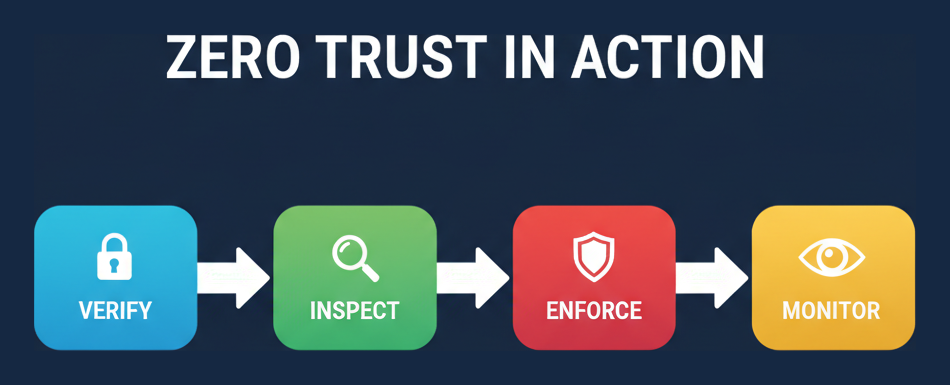
Employers use the certification as a signal that a candidate can secure traffic without a traditional network perimeter. That matters because more organizations now adopt the zero trust security model rather than backhauling traffic to a data center firewall. The exam therefore rewards people who understand how identity, device posture, and policy combine to allow or block a session.
The credential fits several profiles well:
- Security and network administrators moving from appliance-based tools to cloud-delivered security
- SASE and zero trust engineers who own daily policy configuration
- Cloud and infrastructure teams supporting a Zscaler rollout
- Consultants and integrators who deploy Zscaler for clients
What Is the ZDTA Exam Format and Cost?
The ZDTA exam contains 60 questions and gives you 90 minutes to complete them. Zscaler does not publish a passing score: you receive a Pass or Fail result on screen, and the exam costs $300 USD per attempt. The format is multiple choice, with questions drawn from six weighted domains that mirror real administrative tasks on the Zscaler Zero Trust Exchange. Knowing these numbers early helps you plan pacing and study depth.
At 60 questions in 90 minutes, you have roughly 90 seconds per question. That pace favors candidates who recognize configuration scenarios quickly rather than reasoning them out from scratch. Zscaler pitches the ZDTA as a professional-level exam and recommends at least six months of hands-on platform experience, so surface-level familiarity rarely clears it.
| Exam Attribute | Detail |
|---|---|
| Exam name | Zscaler Digital Transformation Administrator (ZDTA) |
| Number of questions | 60 |
| Duration | 90 minutes |
| Passing score | Not published by Zscaler (Pass or Fail result) |
| Exam cost | $300 USD per attempt |
| Question format | Multiple choice |
| Certification validity | Two years from the date earned |
Because Zscaler does not reveal how many correct answers are needed, treat every domain as testable and avoid ignoring the smaller-weighted areas, since a few missed questions there can decide the result. Candidates who fail receive a score breakdown by blueprint area; those who pass receive only a passing status. The engineer tier follows the same scoring policy, and the ZDTE exam guide walks through how that level differs.
What Are the Six ZDTA Exam Domains?
The ZDTA exam is organized into six domains, each carrying a fixed weight that reflects how much of the test it drives. Policy and Security Configuration is the heaviest at 29%, while Integration and Optimization is the lightest at 9%. The remaining four domains cover user and device control, platform operation, observability, and incident handling. Together they map the full administrator workflow.
The table below lists the official domains and their weightings exactly as published. Use it to prioritize study time, but remember that the smaller domains still carry passing-margin weight. If you want to see how these domains translate into real scenarios, work through a set of ZDTA practice questions before you sit the exam.
| Domain | Weight |
|---|---|
| User & Device Management | 18% |
| Platform Management | 18% |
| Policy & Security Configuration | 29% |
| Monitoring, Reporting & Analytics | 13% |
| Troubleshooting & Incident Response | 13% |
| Integration & Optimization | 9% |
Notice how the two 18% domains, User and Device Management and Platform Management, together account for more than a third of the exam. Combined with the 29% policy domain, these three areas represent roughly two-thirds of your score. Build your study plan around that reality.
How Does the Zscaler Zero Trust Exchange Shape the ZDTA Skill Set?
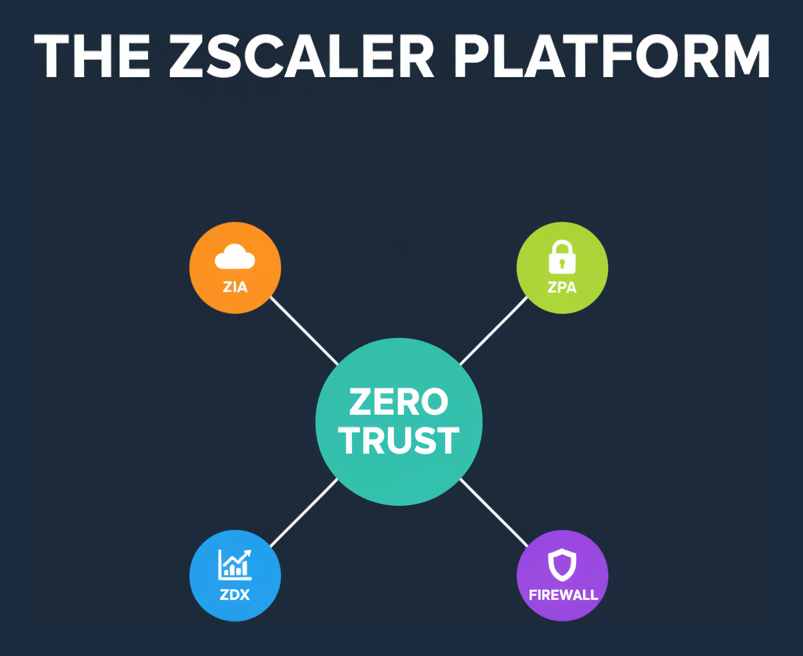
The Zscaler Zero Trust Exchange is the platform every ZDTA task runs on, so the exam expects fluency in its core services. It brokers each connection by verifying identity, checking device posture, assessing risk, and enforcing policy before a session reaches an application. Understanding how its three main services interact is central to both the Platform Management and User and Device Management domains. For the vendor-neutral theory behind that model, see the CSA zero trust credential.
The platform replaces the old model of trusting anything inside the network. Instead of routing users to a resource and then filtering, it connects a verified user directly to a specific application. For deeper background on the underlying model, the Zero Trust Exchange overview explains how connections are brokered at scale. Administrators moving from appliance-based tools often study this alongside a SASE implementation guide to see how the same principles apply across vendors.
Zscaler Internet Access (ZIA)
ZIA secures traffic bound for the internet and SaaS apps. On the exam, expect questions on URL filtering, SSL inspection, threat protection, and how location and user identity shape which policies apply. This service anchors much of the Policy and Security Configuration domain.
Zscaler Private Access (ZPA)
ZPA connects users to internal applications without placing them on the network. Administrators define application segments, connector groups, and access policies. The exam tests how you publish private apps and restrict access by user, device, and posture rather than by IP range.
Zscaler Digital Experience (ZDX)
ZDX measures performance across the path between a user and an application. It supports the Monitoring, Reporting and Analytics domain by helping administrators pinpoint whether a slowdown sits with the device, the network, or the app itself.
Identity and Device Posture
User and Device Management ties these services together. You should know how identity providers feed authentication, how device posture profiles gate access, and how enrollment affects which policies a user receives. These controls decide who connects and under what conditions.
Why Is Policy and Security Configuration the Largest Domain?
Policy and Security Configuration carries 29% of the ZDTA exam because it captures the daily work of a Zscaler administrator. This domain covers how you build and order rules that inspect, allow, or block traffic across the Zero Trust Exchange. Getting policy logic right is what actually protects users, so the exam weights it heavily and tests it in practical scenarios.
Three configuration areas appear often, and each rewards hands-on familiarity over memorization.
SSL and TLS Inspection
Most modern threats hide inside encrypted traffic, so inspection is essential. The exam expects you to understand how Zscaler decrypts, inspects, and re-encrypts sessions, when to bypass inspection for privacy or compatibility, and how certificate trust is established on managed devices.
Threat Protection and Data Loss Prevention
Data Loss Prevention (DLP) rules stop sensitive information from leaving the organization, while threat protection blocks malware and risky destinations. You should know how policies are matched, how rule order affects outcomes, and how exceptions are handled without weakening the overall posture.
Access Policy and Segmentation
Segmentation limits each user to only the applications they need. On the exam, expect scenarios where you define access policies by user group, device posture, and application segment. The goal is least-privilege access enforced consistently, which is the heart of a zero trust design and echoes the NIST zero trust guidelines.
How Do Monitoring, Troubleshooting, and Integration Appear on the Exam?
Three smaller domains round out the ZDTA exam: Monitoring, Reporting and Analytics at 13%, Troubleshooting and Incident Response at 13%, and Integration and Optimization at 9%. Together they make up 35% of the score, so they are far from optional. These domains test whether you can prove a policy is working, fix it when it is not, and connect Zscaler to the wider environment.
Each domain maps to a distinct part of the administrator lifecycle:
- Monitoring, Reporting and Analytics: reading dashboards, running reports, and using ZDX and log data to confirm expected behavior and spot anomalies.
- Troubleshooting and Incident Response: tracing why a user cannot reach an app, interpreting policy evaluation, and following a structured process to resolve access or security incidents.
- Integration and Optimization: connecting Zscaler to identity providers, SIEM tools, and log streaming, then tuning configuration for performance and coverage.
Troubleshooting questions in particular tend to be scenario driven. You are given a symptom, such as a blocked application or failed authentication, and asked to identify the most likely cause. Practicing this diagnostic thinking pays off more than rote memorization here.
How Should You Prepare for the ZDTA Exam?
Preparing for the Zscaler Digital Transformation Administrator exam works best when you combine official learning with hands-on practice and realistic question drills. Because the exam is scenario based and Zscaler does not publish a cut score, memorizing facts alone will not get you there. A structured plan that mirrors the six domains gives you the strongest chance of passing on the first attempt.
Follow a sequence that builds from concepts to application:
- Start with Zscaler official training and role-based learning paths to establish the platform fundamentals. The Zscaler certification programs outline available courses and labs.
- Map your study time to the domain weights, giving the most attention to Policy and Security Configuration and the two 18% domains.
- Get hands-on in a lab or test tenant. Configure ZIA policies, publish a ZPA application, and set up SSL inspection so the concepts become muscle memory.
- Drill with practice questions to expose weak spots and get comfortable with the scenario style and pacing.
- Review incident and troubleshooting workflows, since these questions reward diagnostic logic rather than recall.
Many candidates report that the biggest gap between studying and passing is time spent in the console. Reading about SSL inspection is not the same as configuring it and watching traffic flow through the policy. Build in that practical time before your exam date.
What Career Paths Follow the Zscaler Digital Transformation Administrator?
Earning the ZDTA positions you for roles centered on cloud security, zero trust, and SASE operations. As enterprises retire legacy VPN and firewall infrastructure, demand grows for administrators who can run a cloud security platform end to end. The certification signals that you can own that responsibility, which opens doors across security and network teams.
Common roles that value Zscaler skills include:
- Zero Trust or SASE Administrator
- Cloud Security Engineer
- Network Security Engineer
- Security Operations Analyst
- Infrastructure or Cloud Consultant
These roles sit within a well-paid segment of IT. Cloud and network security engineers in the United States commonly earn six-figure salaries, and specialized zero trust experience tends to lift compensation further. Because Zscaler holds a strong position in the SASE market, platform-specific skills carry weight with employers standardizing on it.
The ZDTA also pairs naturally with broader security credentials. If you already hold or plan to pursue a network security credential, adding platform depth on Zscaler makes your profile both strategic and practical, a combination hiring managers value.
Frequently Asked Questions About the ZDTA
What is the Zscaler Digital Transformation Administrator certification?
It is a Zscaler credential that validates your ability to deploy, configure, and operate the Zscaler Zero Trust Exchange. The ZDTA covers user and device management, platform administration, policy configuration, monitoring, troubleshooting, and integration across ZIA, ZPA, and ZDX.
How many questions are on the ZDTA exam?
The ZDTA exam has 60 multiple-choice questions. You are given 90 minutes to answer them, which works out to roughly 90 seconds per question. The pace rewards candidates who recognize configuration scenarios quickly rather than reasoning each one from first principles.
What score do you need to pass the ZDTA exam?
Zscaler does not publish a passing score for the ZDTA. You see a Pass or Fail result on screen immediately after the exam, and candidates who do not pass receive a breakdown by blueprint area. Because the bar is not disclosed, every domain matters, including the lower-weighted areas like Integration and Optimization.
How much does the ZDTA exam cost?
The Zscaler Digital Transformation Administrator exam costs $300 USD per attempt, and the fee is non-refundable. Budgeting for a practice exam and any official training on top of that fee is wise, since first-attempt success saves both money and time.
Which domain carries the most weight on the ZDTA?
Policy and Security Configuration is the heaviest domain at 29% of the exam. It covers SSL inspection, threat protection, data loss prevention, and access policy design. Focusing your preparation here gives you the best return on study time.
Do you need prior Zscaler experience to take the ZDTA?
Hands-on experience is not formally required, but Zscaler recommends at least six months on the platform and it helps significantly. The exam is scenario based, so candidates who have configured ZIA policies, published ZPA applications, or set up SSL inspection tend to perform much better than those relying on reading alone.
Is the ZDTA focused on zero trust and SASE?
Yes. The certification centers on the Zscaler Zero Trust Exchange, which delivers Secure Access Service Edge capabilities. It tests how you replace perimeter-based access with identity-driven, least-privilege connectivity to internet, SaaS, and private applications.
How long does it take to prepare for the ZDTA?
Most candidates need several weeks of focused study, depending on prior experience. A realistic plan blends official training, lab time in a test tenant, and repeated practice questions across all six domains, with extra attention on policy configuration.
What is the difference between ZIA and ZPA?
ZIA secures outbound traffic to the internet and SaaS applications, handling filtering, inspection, and threat protection. ZPA connects users to internal private applications without placing them on the network. The exam expects you to configure and troubleshoot both services.
Final Thoughts: Is the ZDTA Right for You?
The Zscaler Digital Transformation Administrator certification suits anyone building a career around cloud-delivered security and zero trust access. It proves you can run the Zero Trust Exchange in production, from policy design to troubleshooting, across the exact tasks employers now need. With a clear six-domain blueprint, a defined format, and an undisclosed but reachable passing bar, the path is well marked. Focus your effort on the policy domain, get real console time, and validate your readiness with realistic practice. When you are ready to test where you stand, working through a full set of ZDTA sample questions is the logical next step toward earning the credential.


