Security operations centers now sit at the center of every enterprise defense strategy, and the people who staff them need proof that they can turn raw telemetry into action. The Fortinet SOC analyst credential, earned through the FCSS – Security Operations 7.4 Analyst exam (FCSS_SOC_AN-7.4), is built for exactly that audience. It validates that you can investigate incidents, map adversary behavior, run FortiAnalyzer deployments, and automate response with playbooks inside a Fortinet-powered SOC.
This guide breaks down what the role demands day to day, how the exam is structured, and which skills the four official domains reward. Whether you already work a monitoring shift or you are moving toward your first blue-team position, the sections below map the exam objectives to the work a Fortinet SOC analyst performs and show you a realistic path to passing FCSS_SOC_AN-7.4 on your first attempt.
Table of Contents
- What does a Fortinet SOC analyst actually do?
- What are the FCSS Security Operations 7.4 exam details?
- Which domains does the FCSS_SOC_AN-7.4 exam cover?
- How does the exam test SOC concepts and adversary behavior?
- Why is FortiAnalyzer central to the analyst role?
- What SOC operation skills does the exam expect?
- How does SOC automation with playbooks appear on the exam?
- How should you prepare for the Fortinet SOC analyst exam?
- What career paths open up for a Fortinet SOC analyst?
- Frequently Asked Questions
- Conclusion
What does a Fortinet SOC analyst actually do?
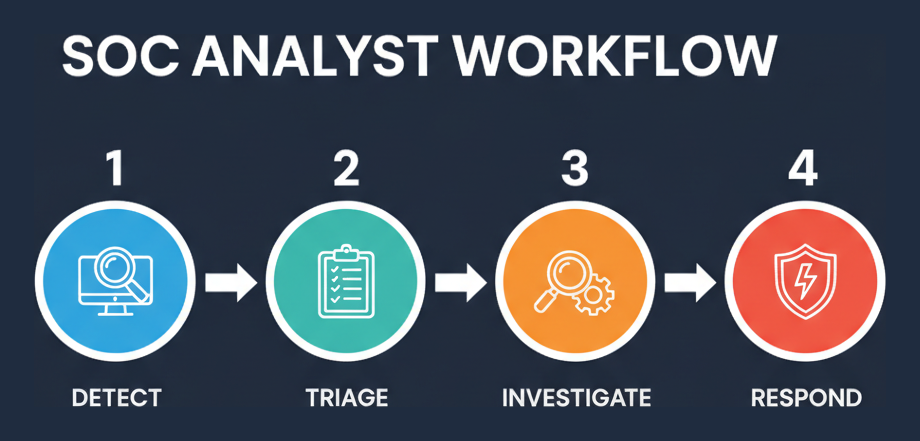
A Fortinet SOC analyst monitors, triages, and responds to security events across a Fortinet Security Fabric, and the FCSS_SOC_AN-7.4 exam measures that exact workload. The role blends detection engineering with incident handling: reviewing alerts in FortiAnalyzer, correlating logs into incidents, mapping activity to known attacker techniques, and driving automated playbooks so that repeatable tasks never wait on a human. It is a hands-on, tool-fluent position rather than a purely theoretical one.
Day to day, the analyst lives inside a small set of responsibilities that the certification mirrors closely:
- Watching event streams and separating genuine threats from noise before they escalate.
- Building and tuning event handlers so that detections stay relevant as the environment changes.
- Investigating incidents end to end, from first indicator to documented root cause.
- Feeding threat-hunting queries and outbreak intelligence back into the detection pipeline.
- Automating containment and enrichment steps with connectors and playbooks.
Because the exam is scenario-driven, it favors candidates who have actually performed these tasks over those who have only memorized product features. If you have earned an adjacent Fortinet credential such as the network security technician path, you already understand how the Fabric fits together, which shortens the ramp to the SOC-specific material.
What are the FCSS Security Operations 7.4 exam details?
The FCSS – Security Operations 7.4 Analyst exam, coded FCSS_SOC_AN-7.4, is a focused assessment that a prepared candidate can complete in a single sitting. It carries 32 questions, runs for 65 minutes, is graded on a pass or fail basis, and costs 400 USD to attempt. Those numbers set a brisk pace, so time management and confident recall of SOC workflows matter as much as raw knowledge. The table below summarizes the specifications you should confirm before scheduling.
| Exam attribute | Detail |
|---|---|
| Exam name | Fortinet FCSS – Security Operations 7.4 Analyst |
| Exam code | FCSS_SOC_AN-7.4 |
| Number of questions | 32 |
| Duration | 65 minutes |
| Passing score | Pass or fail |
| Exam price | 400 USD |
You can rehearse this pacing with a realistic mock environment on the FCSS SOC Analyst page, which mirrors the question style and timing so nothing on exam day feels unfamiliar. Treating the practice sittings as timed dress rehearsals is the single most reliable way to avoid rushing the final third of the paper.
Which domains does the FCSS_SOC_AN-7.4 exam cover?
The FCSS_SOC_AN-7.4 blueprint is organized into four objective areas that trace the lifecycle of a security operations workflow, from understanding adversaries to automating the response. Each area lists the specific tasks Fortinet expects an analyst to perform, and every exam question maps back to one of them. The table reproduces the official domains and their objectives so you can align your study plan directly with what will be tested.
| Domain | Objectives |
|---|---|
| SOC Concepts and Adversary Behavior | Analyze security incidents and identify adversary behaviors; map adversary behaviors to MITRE ATT&CK tactics and techniques; identify components of the Fortinet SOC solution |
| Architecture and Detection Capabilities | Configure and manage collectors and analyzers; design stable and efficient FortiAnalyzer deployments; design, configure, and manage FortiAnalyzer Fabric deployments |
| SOC Operation | Configure and manage event handlers; analyze and manage events and incidents; analyze threat hunting information feeds; manage outbreak alert handlers and reports |
| SOC Automation | Configure playbook triggers and tasks; configure and manage connectors; manage playbook templates; monitor playbooks |
Notice how the domains build on one another. Adversary understanding informs how you architect detection, detection feeds daily operations, and operations create the repeatable patterns you eventually automate. Studying them in that order helps the material stick instead of feeling like four disconnected feature lists.
How does the exam test SOC concepts and adversary behavior?
The first domain of FCSS_SOC_AN-7.4 asks you to think like an investigator: analyze a security incident, identify the adversary behavior behind it, and map that behavior to a recognized framework. Fortinet standardizes this mapping on MITRE ATT&CK, so the exam expects you to translate observed activity, such as credential dumping or lateral movement, into the correct tactic and technique. This shared language is what lets a SOC communicate threats consistently.
Mapping activity to MITRE ATT&CK
Expect scenario questions that describe log evidence and ask which ATT&CK technique it represents. Strong candidates can move fluidly between the observed artifact and the tactic category, and they understand why that mapping drives the response. Spending time in the MITRE ATT&CK matrix pays off directly here, because the exam rewards genuine familiarity with tactic and technique naming rather than rote memorization of a handful of examples.
Knowing the Fortinet SOC solution components
This domain also checks that you can identify the pieces of the Fortinet SOC solution and how they interlock. FortiAnalyzer serves as the analytics and correlation engine, while collectors, analyzers, event handlers, and playbooks form the surrounding machinery. Being able to name each component and state its purpose is foundational, because later domains assume you already know where a given task belongs in that architecture.
Why is FortiAnalyzer central to the analyst role?
FortiAnalyzer is the analytical heart of a Fortinet SOC, and the Architecture and Detection Capabilities domain makes it the technical core of the exam. Candidates must configure and manage collectors and analyzers, design stable and efficient FortiAnalyzer deployments, and build FortiAnalyzer Fabric deployments that scale across sites. In practice, this is where the analyst decides how logs are gathered, correlated, and surfaced as actionable events.
Collectors, analyzers, and Fabric design
A key concept the exam probes is the split between collector and analyzer roles in larger deployments. Collectors gather and forward logs, analyzers correlate and generate insights, and a well-designed Fabric distributes that load so performance stays predictable as data volume grows. You should understand when to separate these roles, how to size a deployment, and how a Fabric topology keeps analysis stable under heavy ingestion.
Because the official documentation is the authoritative reference for these settings, working through the FortiAnalyzer documentation alongside hands-on labs closes the gap between recognizing a feature and configuring it under time pressure. If you previously tackled a firewall-focused credential, the lessons in this enterprise firewall exam guide reinforce how Fabric-connected devices feed the analytics layer you now manage.
What SOC operation skills does the exam expect?
The SOC Operation domain covers the daily rhythm of a Fortinet SOC analyst: configuring and managing event handlers, analyzing and managing events and incidents, examining threat-hunting information feeds, and handling outbreak alerts and reports. This is the domain closest to the actual job, and it rewards candidates who understand not just how to click through the console but why each detection and escalation decision is made.
Event handlers and incident management
Event handlers are the rules that turn matching log activity into events, and tuning them well is what keeps a SOC from drowning in false positives. The exam expects you to create handlers, adjust their conditions, and then follow an event as it is correlated into an incident, investigated, and resolved. Understanding the event-to-incident lifecycle is essential, because sloppy handler design is the most common reason real SOCs lose signal.
Threat hunting and outbreak handling
Beyond reactive alerting, the analyst proactively hunts. You will be tested on interpreting threat-hunting information feeds and on managing outbreak alert handlers that push Fortinet threat intelligence into your environment automatically. The reporting objective ties it together: a SOC analyst must communicate findings clearly, so knowing how to generate and interpret reports is part of the assessed skill set, not an afterthought.
How does SOC automation with playbooks appear on the exam?
Automation is where a modern SOC scales, and the SOC Automation domain closes the FCSS_SOC_AN-7.4 blueprint. It asks you to configure playbook triggers and tasks, configure and manage connectors, manage playbook templates, and monitor playbooks in production. The underlying idea is straightforward: repeatable investigation and containment steps should run without waiting on an analyst, freeing human attention for genuinely novel threats.
Triggers, tasks, and connectors
The exam distinguishes between the trigger that starts a playbook, whether it fires on a schedule, an event, or an incident, and the tasks that execute afterward. Connectors are what let a playbook reach out to other Fabric components or external systems to enrich data or take action. You should be comfortable explaining how a trigger, a chain of tasks, and the right connector combine to automate a specific response.
Templates and monitoring
Fortinet ships playbook templates that accelerate common workflows, and the exam expects you to adapt them rather than build every automation from scratch. Equally important is monitoring: a playbook that fails silently is worse than no automation at all. Knowing how to watch playbook execution, read its status, and confirm that automated tasks completed correctly rounds out this domain and, with it, the full analyst skill set.
How should you prepare for the Fortinet SOC analyst exam?
Preparing for FCSS_SOC_AN-7.4 works best when you treat it as building a workflow rather than memorizing facts, because every domain describes a task you can practice. A structured plan that pairs the official curriculum with hands-on repetition and timed mock exams gives you both the knowledge and the pacing the 65-minute format demands. The steps below outline a preparation path that mirrors the exam’s own lifecycle.
- Start with the official Security Operations 7.4 Analyst course to anchor your understanding of the four domains.
- Build a lab with FortiAnalyzer so you can configure collectors, analyzers, and event handlers yourself.
- Practice mapping sample incidents to MITRE ATT&CK until the tactic-and-technique language feels natural.
- Create, run, and monitor a few playbooks so automation moves from theory to muscle memory.
- Take full-length timed practice exams and review every miss until you understand the underlying concept.
Fortinet publishes free and paid learning paths through its training institute, and the Fortinet training programs map cleanly to the exam objectives. Layering that structured content on top of lab work and repeated mock sittings is what converts familiarity into the confident recall the timed exam rewards.
What career paths open up for a Fortinet SOC analyst?
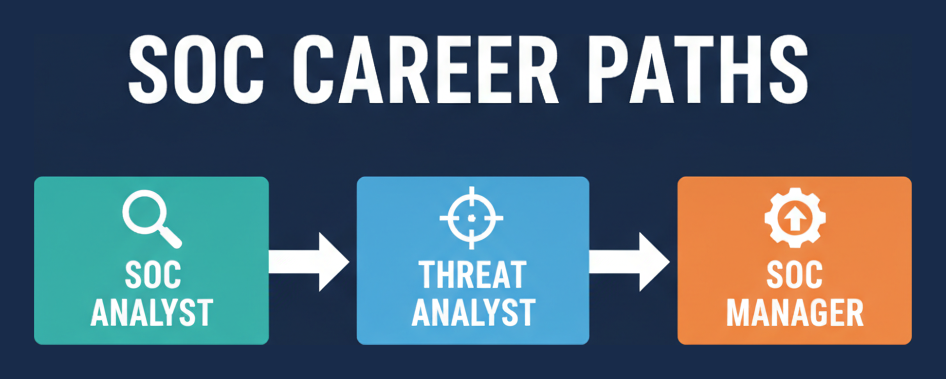
Earning the FCSS_SOC_AN-7.4 credential positions you for the fastest-growing corner of cybersecurity: defensive security operations. The skills it validates, incident analysis, detection engineering, threat hunting, and response automation, are the exact competencies employers screen for when staffing a SOC. As a specialist certification within the Fortinet Certified Solution Specialist track, it also signals depth on a platform many enterprises and managed security service providers already run.
Typical roles and progression paths this credential supports include:
- SOC analyst positions across tier 1 and tier 2 monitoring and investigation teams.
- Security operations or blue-team roles inside managed security service providers.
- Detection engineering and threat-hunting specializations that build on the operations foundation.
- Incident response roles where playbook automation and Fabric knowledge are direct assets.
Because the certification is grounded in a specific product ecosystem, it pairs naturally with broader Fortinet credentials to deepen your Fabric expertise. Analysts who combine SOC operations skills with firewall, network, and analytics knowledge tend to advance fastest, since they can reason about a threat from the endpoint all the way to the correlation engine.
Frequently Asked Questions
What is the FCSS_SOC_AN-7.4 exam?
It is the Fortinet FCSS – Security Operations 7.4 Analyst exam, a specialist certification that validates your ability to run security operations on the Fortinet platform, covering adversary analysis, FortiAnalyzer architecture, SOC operations, and automation.
How many questions are on the Fortinet SOC analyst exam?
The exam contains 32 questions and must be completed within 65 minutes, so pacing yourself to roughly two minutes per question keeps you on track.
How much does the FCSS Security Operations 7.4 Analyst exam cost?
The exam costs 400 USD per attempt. Confirm current regional pricing when you schedule, as taxes and local currency conversions can change the final amount.
What passing score do I need?
Fortinet reports the FCSS_SOC_AN-7.4 result on a pass or fail basis rather than publishing a fixed percentage, so aim to answer confidently across all four domains rather than targeting a single threshold.
Do I need prior Fortinet experience to become a SOC analyst?
Prior hands-on time with the Fortinet Security Fabric helps considerably, because the exam is scenario-based. Candidates who have configured FortiAnalyzer or worked in a monitoring role adapt to the material fastest.
Which framework does the exam use for adversary mapping?
The exam standardizes on MITRE ATT&CK. You are expected to map observed behaviors to the correct tactics and techniques, so familiarity with the ATT&CK matrix is essential.
How central is FortiAnalyzer to the certification?
FortiAnalyzer is the technical core. An entire domain covers configuring collectors and analyzers and designing FortiAnalyzer and FortiAnalyzer Fabric deployments, so hands-on practice with the product is strongly recommended.
What role does automation play on the exam?
Automation is one of the four domains. You must understand playbook triggers and tasks, connectors, templates, and how to monitor playbooks so that repeatable response steps run reliably without manual intervention.
How long should I study for FCSS_SOC_AN-7.4?
Most candidates with some SOC or Fortinet background prepare over several weeks, combining the official course, lab practice, and timed mock exams. Those new to security operations should plan for additional lab time.
Conclusion
The Fortinet SOC analyst credential is a practical, career-shaping certification that mirrors the real work of defending a modern security operations center. Across its four domains, FCSS_SOC_AN-7.4 asks you to understand adversaries, architect FortiAnalyzer detection, run daily SOC operations, and automate response with playbooks, exactly the skills employers reward. Approach your preparation as building a repeatable workflow: study the official objectives, practice in a live lab, map incidents to MITRE ATT&CK, and rehearse under the clock with timed mock exams. Do that, and you will walk into the 65-minute exam ready to demonstrate genuine analyst capability rather than memorized trivia. Start your structured preparation today, book the exam once your practice scores hold steady, and take the next step toward a security operations career built on Fortinet.


