
Table of Contents
- What Does the GIAC Cloud Security Essentials (GCLD) Certification Validate?
- What Are the GCLD Exam Details and Format?
- Which Objectives Does the GCLD Exam Cover?
- How Does the GCLD Test Cloud Security Controls and Secure Compute Deployment?
- Why Do Shared Responsibility and Multicloud Skills Matter for the GCLD?
- How Does the GCLD Approach IAM, Secrets, and Data Protection?
- How Should You Prepare for the GIAC Cloud Security Essentials Exam?
- What Career Paths Open After Earning the GCLD?
- Frequently Asked Questions About the GCLD Certification
- Conclusion
What Does the GIAC Cloud Security Essentials (GCLD) Certification Validate?
The GIAC Cloud Security Essentials (GCLD) certification validates that a professional can implement and manage security controls for workloads hosted in public cloud environments. It confirms hands-on knowledge across identity, networking, data protection, logging, compute, and incident response, showing that a holder can apply preventive, detective, and reactive techniques to defend cloud-based assets rather than merely describe them in theory.
GCLD is a practitioner credential, not a vendor sales badge. It is platform-informed rather than platform-locked, drawing examples from major public clouds so the skills transfer wherever the organization runs its workloads. The certification suits engineers, analysts, and architects who already understand core security concepts and now need to prove they can operate those concepts inside cloud consoles, APIs, and infrastructure-as-code pipelines.
Because the credential emphasizes practical defense, candidates are expected to reason about configurations, trade-offs, and failure modes. A typical question does not ask for a definition; it asks which control best mitigates a described risk, or how to detect a specific class of intrusion using native cloud tooling.
What Are the GCLD Exam Details and Format?
The GCLD exam is a proctored, multiple-choice assessment delivered by GIAC. It contains 75 questions, runs for 120 minutes, and requires a 61% score to pass, with an exam cost of $999 USD. The format is open-book in the GIAC tradition, meaning candidates may reference their own materials, so raw memorization matters far less than organized, quickly searchable notes.
The specifications below are drawn from the money-site syllabus page and should anchor your scheduling and pacing plan. With 75 questions across 120 minutes, you have roughly 96 seconds per question, which is comfortable if your reference index is well built and slow if you have to hunt through disorganized notes.
| Exam Attribute | Detail |
|---|---|
| Number of Questions | 75 |
| Duration | 120 minutes |
| Passing Score | 61% |
| Exam Cost | $999 (USD) |
| Format | Multiple choice, proctored, open reference |
| Delivery | Remote proctored or testing center |
Confirm current pricing, attempt policies, and delivery options against the GCLD certification page before you register, since practice resources and exam logistics are periodically refreshed.
Which Objectives Does the GCLD Exam Cover?
The GCLD exam is organized around 16 published objectives that together map the full lifecycle of securing a public cloud environment. They span account fundamentals, networking, data discovery, secrets management, compute deployment, monitoring, and compliance. GIAC lists these objectives without fixed percentage weightings, so treat every area as testable and build depth evenly across the entire list.
The table reproduces each objective exactly as published on the syllabus, with a short description of what a candidate is expected to demonstrate. Use it as a coverage checklist: every row should map to notes, a lab, or a worked example before you sit the exam.
| # | Objective | What the Candidate Demonstrates |
|---|---|---|
| 1 | Attacking the Cloud and Responding to Intrusions | Understands the process and considerations for conducting a penetration test or responding to an incident involving public cloud resources. |
| 2 | Cloud Account Fundamentals | Understands cloud identity fundamentals and access management, and applies best practices to control access for each identity type. |
| 3 | Cloud Automation | Provisions and manages cloud infrastructure using Infrastructure as Code and supports continuous, repeatable evaluation tasks with automation. |
| 4 | Cloud Logging Fundamentals | Collects cloud logs in ways that support utility and dissemination across the environment. |
| 5 | Cloud Networking Technology | Applies fundamental network security concepts using cloud resources. |
| 6 | Containers and Cloud Storage | Works with serverless compute, container technologies, orchestration for elasticity, and secure cloud storage architecture. |
| 7 | Discovering and Storing Sensitive Data | Handles data security in multi-tenant environments and configures resources to deter leakage using encryption and data loss prevention. |
| 8 | External access and IAM Best Practices | Evaluates the security of integrating third-party services with a cloud environment and validates integration resilience. |
| 9 | Frameworks for Built-in Security | Uses development lifecycle and application security frameworks to build secure baselines, including continuous integration and deployment. |
| 10 | Network Security Monitoring in the Cloud | Collects and interprets network flow data and packet captures to enhance detection and response in the cloud. |
| 11 | Risk Management and Compliance | Addresses regulatory, compliance, security assurance, and risk management requirements using recognized frameworks. |
| 12 | Secrets Management | Secures user secrets and integrates a variety of authentication mechanisms in a cloud environment. |
| 13 | Secure Compute Deployment | Manages resource allocation, image evaluation, attack surface reduction, and patch management for compute resources. |
| 14 | Securing Cloud Networks | Applies network isolation and remote access controls and defends against common attacks on cloud resources. |
| 15 | Understanding Shared Responsibility and Threat Informed Defense | Uses threat modeling to build threat-informed defenses and understands shared responsibility across service delivery models. |
| 16 | Using Sensitive Data | Understands cloud elasticity and high availability and secures data in transit between cloud resources and application users. |
You can cross-check these against the official GCLD objectives published by GIAC, which mirror the same practical scope.
How Does the GCLD Test Cloud Security Controls and Secure Compute Deployment?
The GCLD tests cloud security controls by asking candidates to select and configure the right protective measures for a described scenario, then verify that those controls actually reduce risk. Secure compute deployment objectives probe resource allocation, image evaluation, attack-surface reduction, and patch management, so the exam rewards people who understand how a hardened image and a tight deployment pipeline prevent problems before runtime.
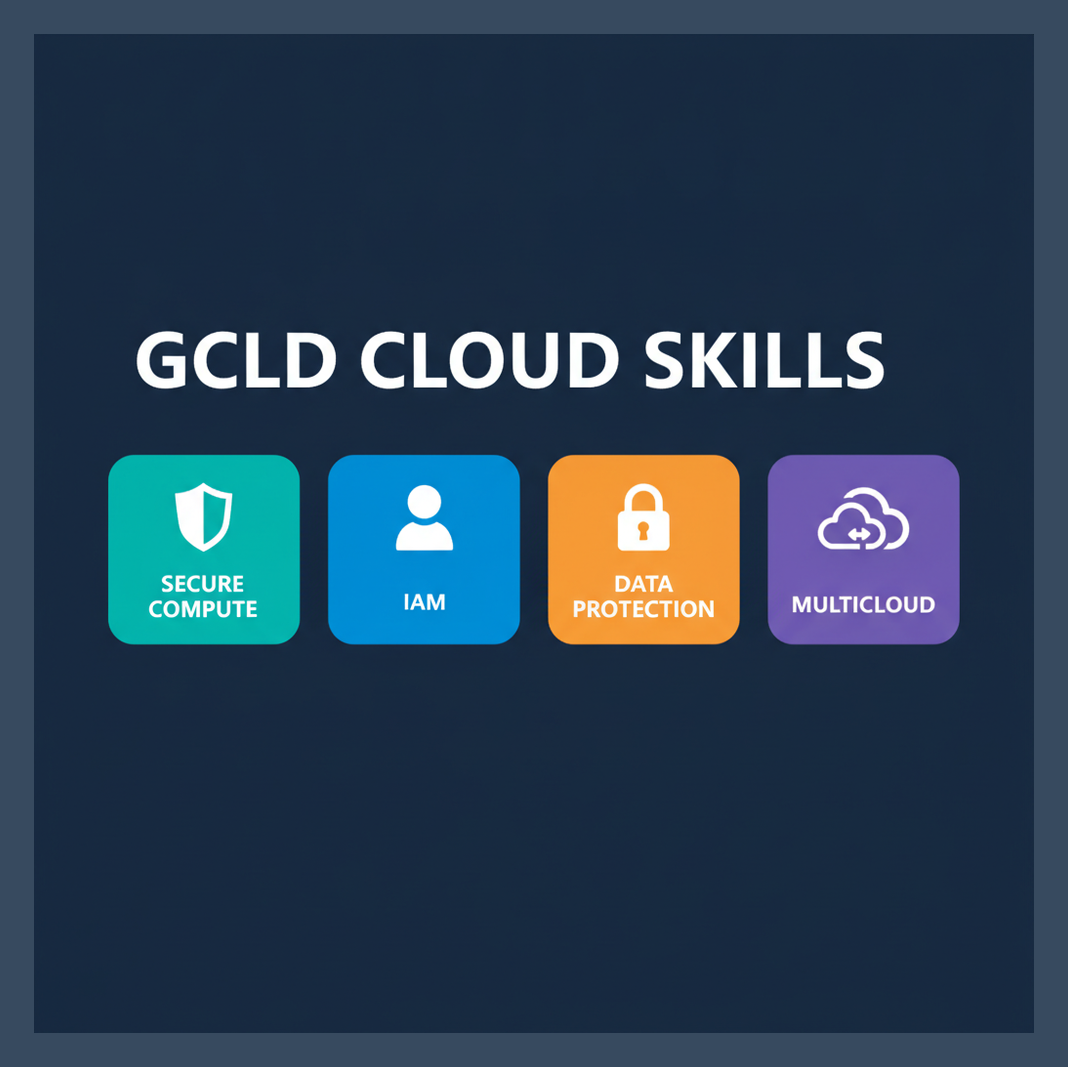
Rather than memorizing feature names, focus on the reasoning behind each control. The exam repeatedly returns to a few control families.
Preventive controls that shrink the attack surface
- Golden or baseline images that ship with hardening applied, reducing configuration drift.
- Least-privilege identity policies that limit what a compromised workload can reach.
- Network isolation using private subnets, security groups, and segmentation.
- Automated patch management so vulnerable images are replaced, not manually fixed.
Detective controls that surface intrusions
- Centralized logging that captures API activity and workload behavior.
- Network security monitoring using flow data and packet capture.
- Configuration and posture checks that flag drift from a secure baseline.
Secure Compute Deployment and Frameworks for Built-in Security overlap heavily here. A candidate who can describe a continuous integration pipeline that scans images, enforces policy, and blocks non-compliant builds is answering several objectives at once. Treat the pipeline as the connective tissue between deployment, automation, and application security.
Why Do Shared Responsibility and Multicloud Skills Matter for the GCLD?
Shared responsibility is central to the GCLD because every cloud control decision depends on knowing where the provider’s duties end and the customer’s begin. The exam expects candidates to map responsibility correctly across infrastructure, platform, and software service models, then choose controls that fit whichever layer the organization actually owns. Getting this boundary wrong is the root cause of most real cloud incidents.
Multicloud fluency matters because the GCLD is deliberately platform-informed rather than tied to a single vendor. Concepts such as identity federation, network segmentation, key management, and logging exist on every major platform, even when the console names and defaults differ.
How responsibility shifts across service models
| Service Model | Provider Handles | Customer Handles |
|---|---|---|
| Infrastructure as a Service | Physical hosts, hypervisor, core network | Operating system, patching, apps, identity, data |
| Platform as a Service | Runtime, operating system, underlying network | Application code, configuration, access, data |
| Software as a Service | Application and most infrastructure | Data classification, access management, usage policy |
Threat-informed defense builds on this foundation. When you know which layer you own, you can model realistic threats against it and prioritize controls accordingly. The GCLD frames this as connecting threat modeling to concrete configuration choices, which is why candidates benefit from external reference material such as the Cloud Security Alliance guidance and the NIST public cloud guidelines, both of which describe responsibility boundaries in depth.
How Does the GCLD Approach IAM, Secrets, and Data Protection?
The GCLD treats identity, secrets, and data protection as the core of cloud defense because most cloud compromises trace back to weak access control or exposed credentials. Candidates must show they can manage cloud identities, enforce least privilege, secure machine and human secrets, and protect sensitive data at rest and in transit using encryption, key management, and data loss prevention strategies.
Several objectives reinforce each other in this area, so it pays to study them as a cluster rather than in isolation.
Identity and access management
- Distinguish identity types, from human users to roles and workload identities, and apply the right controls to each.
- Design least-privilege policies and evaluate whether a granted permission is actually necessary.
- Assess third-party integrations and validate that federated or delegated access does not widen the blast radius.
Secrets and data protection
- Store secrets in managed vaults rather than code, environment variables, or images.
- Integrate authentication mechanisms so applications retrieve credentials securely at runtime.
- Discover sensitive data across multi-tenant storage, then apply encryption and data loss prevention to deter leakage.
- Protect data in transit between cloud resources and end users with strong transport security.
A useful mental model is that identity defines who can act, secrets define how systems prove they are trusted, and data protection defines what remains safe even when a control fails. The exam frequently combines all three in a single scenario, so practice tracing a request from authentication through authorization to the data it touches.
How Should You Prepare for the GIAC Cloud Security Essentials Exam?
Preparing for the GIAC Cloud Security Essentials exam works best when hands-on practice drives your study rather than passive reading. Because the GCLD is open reference, the highest-value preparation is building a well-indexed set of notes and completing labs in a real cloud account, so you recall not just what a control does but exactly where to configure and verify it under time pressure.
A structured plan keeps the 16 objectives from blurring together.
- Map every objective from the syllabus table above to a note section and at least one practical exercise.
- Build a searchable index of your notes, since fast lookup matters more than memorization on an open-reference exam.
- Spin up a low-cost lab account and practice identity policies, logging, network isolation, and secrets storage directly.
- Take timed practice questions to calibrate pacing near 96 seconds per question and to expose weak objectives.
- Review incident-response and monitoring scenarios last, since they tie earlier objectives together.
Formal training accelerates this if your budget allows. The SANS cloud security course aligned to this credential provides guided labs across major platforms, though disciplined self-study with the objective list is a valid path. If you are new to GIAC-style open-book exams, reviewing the format used by adjacent credentials such as the GSEC Security Essentials guide helps you build the note-taking habits the GCLD rewards.
What Career Paths Open After Earning the GCLD?
Earning the GCLD signals that you can secure production cloud workloads, which maps directly to roles that organizations struggle to fill. Cloud security engineer, security analyst, DevSecOps engineer, and cloud-focused security architect are the most common destinations, and the credential also strengthens generalist security roles that increasingly require cloud fluency as workloads migrate off premises.
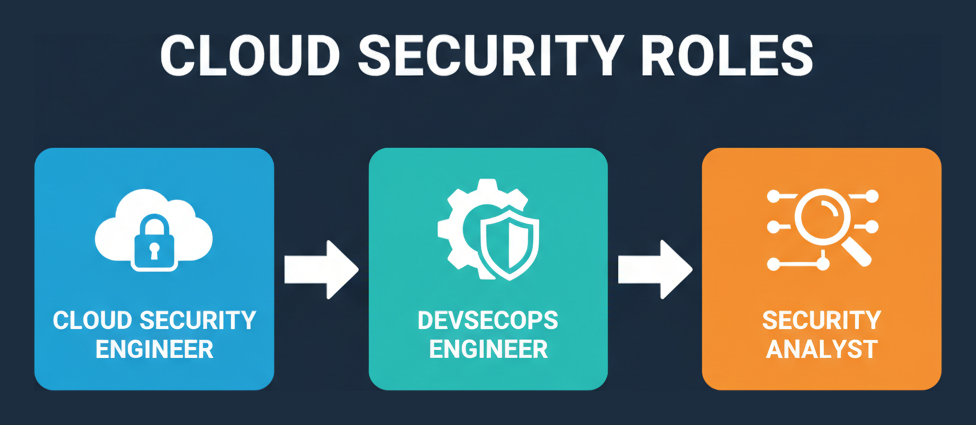
The certification is most valuable when paired with demonstrable hands-on work. Employers read the GCLD as evidence that a candidate can operate securely inside cloud consoles and pipelines, not just discuss frameworks.
| Role | How the GCLD Applies |
|---|---|
| Cloud Security Engineer | Designs and enforces preventive and detective controls across cloud accounts. |
| DevSecOps Engineer | Builds security into CI/CD pipelines, image scanning, and infrastructure as code. |
| Security Analyst | Monitors cloud logs and network flow data to detect and respond to intrusions. |
| Cloud Security Architect | Maps shared responsibility and threat models to control decisions at scale. |
GCLD also complements forensic and incident-response credentials for professionals moving toward cloud-native detection work. If your goal is a deeper investigative path, comparing it with the GIAC GCFA certification clarifies where cloud security essentials end and specialized forensics begin.
Frequently Asked Questions About the GCLD Certification
Is the GCLD exam open book?
Yes. Like most GIAC certifications, the GCLD is open reference, so candidates may bring their own printed or indexed materials. This makes organized, searchable notes far more valuable than rote memorization, because you need to find answers quickly within the 120-minute limit.
How many questions are on the GCLD exam?
The GCLD contains 75 questions delivered over 120 minutes. That gives roughly 96 seconds per question, which is manageable when your reference index is well organized and stressful when it is not.
What score do I need to pass the GCLD?
The passing score for the GCLD is 61%. Because objectives are published without fixed weightings, it is safest to study every area evenly rather than gambling that some topics carry more weight than others.
Does the GCLD require experience with a specific cloud provider?
No single provider is mandatory. The GCLD is platform-informed and teaches concepts such as identity, networking, logging, and encryption that apply across major public clouds, so hands-on practice in any one major platform transfers well to the exam.
How much does the GCLD exam cost?
The GCLD exam costs $999 USD. Confirm current pricing and any bundle options when you register, since GIAC periodically updates fees and attempt policies.
Who should take the GCLD certification?
The GCLD suits security engineers, analysts, DevSecOps practitioners, and architects who already understand core security principles and now need to prove they can apply them in cloud environments. It is a practitioner credential rather than an entry-level introduction to security. Practitioners who want the automation side of that work in depth should read the GCSA certification guide.
How is the GCLD different from a vendor cloud certification?
Vendor certifications validate skills on one platform, while the GCLD focuses on transferable cloud security concepts across providers. It emphasizes defensive reasoning, shared responsibility, and control selection rather than a single vendor’s console workflow.
How long should I study for the GCLD?
Study time varies with background, but candidates with existing security and cloud experience often prepare over several weeks of focused labs and note-building. The key metric is coverage: every one of the 16 objectives should map to notes and at least one practical exercise before exam day.
Does the GCLD expire?
GIAC certifications are valid for a set period and require renewal through continuing education or reexamination. Check your certification account for the current renewal cycle and credit requirements to keep the credential active.
Conclusion
The GIAC Cloud Security Essentials (GCLD) certification rewards practitioners who can defend real cloud workloads, not just describe cloud concepts. Its 16 objectives cover the full arc of cloud defense, from account fundamentals and secrets management to monitoring, compliance, and incident response, and its open-reference format favors organized, hands-on preparation over memorization. Treat the objective list as a coverage checklist, pair every topic with lab work, and build a fast index of your notes. Do that, and the exam becomes a confirmation of skills you already use rather than a hurdle. Ready to move forward? Map your study plan to the 16 objectives, book a lab account, and validate your cloud security skills with the GCLD.


