Table of Contents
- What Does the Oracle Database SQL Certification Validate?
- What Are the Oracle 1Z0-071 Exam Details and Syllabus?
- How Do SELECT Statements and Joins Work on the 1Z0-071 Exam?
- What DML and DDL Skills Does the 1Z0-071 Exam Test?
- How Are Constraints and Views Assessed in 1Z0-071?
- What Should You Know About Subqueries and SET Operators?
- How Should You Prepare for the Oracle Database SQL Certification?
- What Career Paths Follow the 1Z0-071 Certification?
- Frequently Asked Questions About the 1Z0-071 Exam
- Conclusion
What Does the Oracle Database SQL Certification Validate?
The Oracle Database SQL certification, earned through exam 1Z0-071, validates that a candidate can write and interpret SQL against an Oracle database with accuracy and confidence. It confirms working command of data retrieval, filtering, sorting, joins, single-row and group functions, subqueries, DML, and core DDL, proving practical fluency rather than theoretical familiarity with relational concepts.
Oracle positions this credential as a foundation qualification that also counts toward higher associate and professional tracks. Because SQL is a declarative language built on the relational model, the exam expects you to understand how tables, columns, and rows relate, and how a single statement can act on many records at once. The Oracle Database concepts documentation frames these fundamentals, and 1Z0-071 turns that theory into testable, hands-on skill.
The credential appeals to a broad audience: application developers, database administrators early in their careers, business intelligence analysts, and anyone whose work depends on querying Oracle data directly. Passing signals to employers that you can be trusted with production queries without introducing costly logic errors.
What Are the Oracle 1Z0-071 Exam Details and Syllabus?
The Oracle 1Z0-071 exam is a proctored, multiple-choice test of 63 questions with a 120-minute time limit and a required passing score of 63 percent. The registration fee is USD 245, and the exam is titled Oracle Database SQL. The specifications below are the figures you register and prepare against, so confirm them before booking a seat.
| Specification | Detail |
|---|---|
| Exam Code | 1Z0-071 |
| Exam Name | Oracle Database SQL |
| Number of Questions | 63 |
| Duration | 120 minutes |
| Passing Score | 63% |
| Format | Multiple Choice Questions (MCQ) |
| Exam Price | USD $245 (price may vary by country or by localized currency) |
The syllabus spans sixteen topic areas that together cover the full lifecycle of querying and shaping data. Study each area on a live Oracle instance rather than reading alone, and use a focused question bank such as the Oracle Database SQL page to rehearse under timed conditions. The official topics are listed verbatim below.
| # | Exam Topic |
|---|---|
| 1 | Relational Database concepts |
| 2 | Retrieving Data using the SQL SELECT Statement |
| 3 | Restricting and Sorting Data |
| 4 | Using Single-Row Functions to Customize Output |
| 5 | Using Conversion Functions and Conditional Expressions |
| 6 | Reporting Aggregated Data Using Group Functions |
| 7 | Displaying Data from Multiple Tables |
| 8 | Using Subqueries to Solve Queries |
| 9 | Using SET Operators |
| 10 | Managing Tables using DML statements |
| 11 | Managing Indexes Synonyms and Sequences |
| 12 | Use DDL to manage tables and their relationships |
| 13 | Managing Views |
| 14 | Controlling User Access |
| 15 | Managing Objects with Data Dictionary Views |
| 16 | Managing Data in Different Time Zones |
How Do SELECT Statements and Joins Work on the 1Z0-071 Exam?
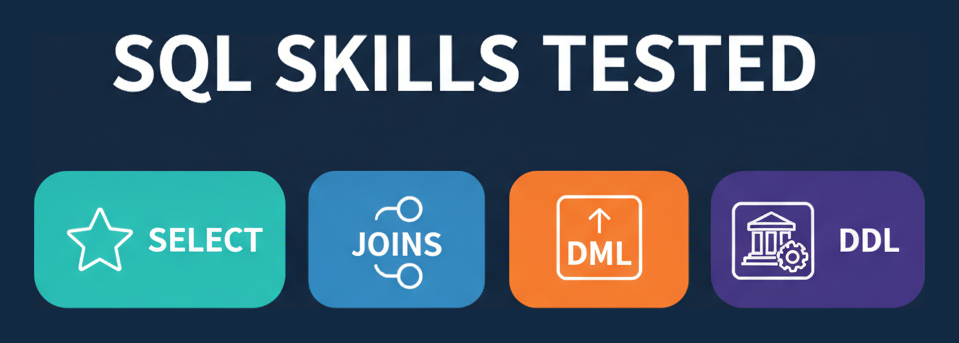
SELECT-based retrieval is the heart of the 1Z0-071 exam, drawing on the syllabus areas for retrieving, restricting, and sorting data as well as displaying data from multiple tables. Expect questions that ask you to predict output, spot a syntax error, or choose the clause that produces a required result set across joined tables. Precision with clause order matters as much as knowing the keywords.
The exam tests the logical order in which clauses execute, which differs from the order you write them. A strong candidate can trace a statement from the FROM clause through WHERE, GROUP BY, HAVING, and ORDER BY and explain what each stage filters or reshapes.
Join Types You Must Recognise
- Inner joins that return only matching rows across tables
- Left, right, and full outer joins that preserve unmatched rows from one or both sides
- Cross joins that produce a Cartesian product
- Self joins that relate a table to itself, common in hierarchies
- Natural joins and USING clauses that join on identically named columns
You should be equally comfortable with older Oracle join syntax and the ANSI-standard JOIN keywords, because questions can present either. Oracle’s SQL Language Reference documents every join form and clause, and reviewing it clears up the edge cases the exam loves to probe, such as how NULLs behave in outer joins and how ambiguous column names must be qualified.
What DML and DDL Skills Does the 1Z0-071 Exam Test?
Beyond querying, the 1Z0-071 exam confirms you can change data and structure. The Managing Tables using DML statements topic and the Use DDL to manage tables and their relationships topic mean you must handle INSERT, UPDATE, DELETE, and MERGE alongside CREATE, ALTER, DROP, and TRUNCATE. Questions frequently combine both, checking whether you understand how transactions and definitions interact.
Data Manipulation Language
DML questions test row-level changes and the transaction control that surrounds them. You need to know how COMMIT and ROLLBACK bound a transaction, how a savepoint lets you undo part of one, and how MERGE performs a conditional insert-or-update in a single pass. Watch for questions where an implicit commit from a DDL statement ends an open transaction unexpectedly.
Data Definition Language
DDL questions cover creating and altering tables, choosing correct data types, and managing related objects. The syllabus explicitly includes indexes, synonyms, and sequences, so expect items on how a sequence generates values, why a synonym simplifies object references, and when an index helps or hurts. Oracle’s SQL Quick Reference is a compact way to drill the exact statement syntax these questions demand.
How Are Constraints and Views Assessed in 1Z0-071?
Constraints and views appear across several 1Z0-071 topics, including Use DDL to manage tables and their relationships, Managing Views, and Controlling User Access. The exam checks whether you can enforce data integrity through constraints and whether you can build views that present or restrict data cleanly. These are the mechanisms that keep an Oracle schema trustworthy as it grows.
Constraint Types on the Exam
- PRIMARY KEY to uniquely identify each row
- FOREIGN KEY to enforce referential integrity between tables
- UNIQUE to prevent duplicate values in a column
- NOT NULL to require a value
- CHECK to validate values against a condition
You should know how to add, disable, and enable constraints, and how a foreign key reacts when a referenced row is deleted. For views, the exam expects you to create simple and complex views, understand which views permit DML, and use views together with the Controlling User Access topic to grant and revoke privileges. Together these topics prove you can protect data as well as query it.
What Should You Know About Subqueries and SET Operators?
Subqueries and SET operators are two of the more challenging 1Z0-071 areas, mapping to the Using Subqueries to Solve Queries and Using SET Operators topics. They reward candidates who think in sets rather than loops. Expect nested queries feeding a WHERE or FROM clause, correlated subqueries that reference the outer query, and combinations of result sets through UNION, INTERSECT, and MINUS.
Subquery Patterns
- Single-row subqueries that return one value for comparison operators
- Multiple-row subqueries used with IN, ANY, and ALL
- Correlated subqueries evaluated once per outer row
- Inline views that place a subquery in the FROM clause
- EXISTS and NOT EXISTS checks for related rows
SET Operator Rules
SET operators combine the results of two queries that must share column count and compatible data types. UNION removes duplicates while UNION ALL keeps them, INTERSECT returns common rows, and MINUS returns rows in the first query only. A frequent trap is forgetting that the final ORDER BY applies to the combined result, not to each branch. Practising these operators against sample data builds the pattern recognition the exam rewards.
How Should You Prepare for the Oracle Database SQL Certification?
Effective preparation for the Oracle Database SQL certification pairs consistent hands-on practice with structured review of all sixteen syllabus topics. Because 1Z0-071 rewards accuracy under time pressure, the most reliable plan is to write real queries daily on a live Oracle instance, then rehearse with timed question sets until you can finish comfortably inside the 120-minute limit.
A Practical Study Sequence
- Install Oracle Database Express Edition or use a free cloud instance to practise every statement type.
- Work through the syllabus in order, from relational concepts and SELECT retrieval to time-zone handling.
- Build small schemas so you can test joins, constraints, views, and subqueries against your own data.
- Take full-length timed practice exams and review every incorrect answer until the reason is clear.
- Revisit weak topics in the final week rather than re-reading material you already know.
Candidates moving toward administration often follow this credential with database-focused exams, and studying alongside broader database-administration material helps you see where SQL skills feed into wider DBA work. Treat practice questions as diagnostics: each miss points to a topic to reinforce, not just a score to record.
What Career Paths Follow the 1Z0-071 Certification?
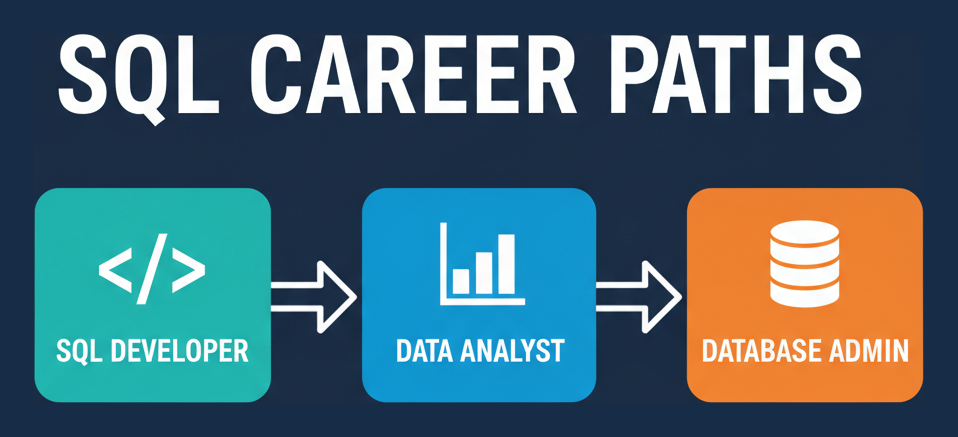
The Oracle Database SQL certification opens roles wherever Oracle data must be queried, shaped, and reported, and it acts as a stepping stone into deeper database careers. Because SQL is a foundational, long-lived skill standardised across the industry, the 1Z0-071 credential stays relevant even as tools and platforms evolve around it. It signals immediate, verifiable competence to hiring managers.
Roles That Value This Credential
- SQL Developer writing and tuning queries for applications
- Database Administrator managing Oracle schemas and access
- Business Intelligence and Data Analyst extracting insight from relational data
- Application Developer embedding SQL in enterprise software
- Data Engineer building pipelines that draw from Oracle sources
SQL itself has a decades-long history as a standardised language, and the the SQL standard shows why the skill remains durable across employers and platforms. From this foundation, many professionals advance toward administration and performance work, and a resource on database performance tuning illustrates the natural next step once query-writing is second nature. The credential is a starting line for a data career, not a finish line.
Frequently Asked Questions About the 1Z0-071 Exam
How many questions are on the 1Z0-071 exam?
The 1Z0-071 exam contains 63 multiple-choice questions. You have 120 minutes to complete them, which averages a little under two minutes per question, so pacing and quick recognition of correct syntax both matter on exam day.
What is the passing score for Oracle 1Z0-071?
The required passing score is 63 percent. Because the margin is not large, aim to answer the topics you know quickly and accurately, leaving time to reason carefully through joins, subqueries, and SET operator questions that need more thought.
How much does the 1Z0-071 exam cost?
The exam fee is USD 245, though the price may vary by country or by localized currency. Confirm the current amount in your region when you register, since taxes and local pricing can change the final total you pay.
Is the Oracle Database SQL certification good for beginners?
Yes. The Oracle Database SQL certification is designed as a foundation credential, making it a strong first Oracle exam for developers and analysts who already write some SQL and want a recognised proof of skill against an enterprise database.
What topics does the 1Z0-071 exam cover?
The syllabus spans sixteen topics, from relational concepts, SELECT retrieval, restricting and sorting data, and single-row functions through joins, subqueries, SET operators, DML, DDL, views, user access, data dictionary views, and managing data across time zones. Once SQL is solid, the usual next specialism is the Oracle database security certification.
Do I need programming experience to pass 1Z0-071?
No prior programming language is required, but hands-on SQL practice is essential. The exam checks whether you can write and predict the output of statements, so time spent querying a live Oracle instance matters far more than general coding background.
How long should I study for the 1Z0-071 exam?
Many candidates prepare over six to eight weeks with steady daily practice, though timelines vary with prior SQL experience. Focus on hands-on repetition across all sixteen topics and timed mock exams rather than a fixed number of study hours.
Does the 1Z0-071 certification expire?
Oracle SQL fundamentals remain stable, and this credential is widely treated as a lasting proof of skill. Always check Oracle’s current certification policy for any retirement or version notes before you register, since Oracle occasionally refreshes exam versions.
What is the difference between old and ANSI join syntax on the exam?
The exam can present traditional Oracle join syntax that uses the WHERE clause and the (+) outer join operator, or ANSI-standard JOIN keywords. You should read and write both, because a single question may rely on recognising either form correctly.
Conclusion
The Oracle Database SQL certification turns everyday SQL skill into a credential employers recognise, and the 1Z0-071 exam measures exactly the abilities that matter on the job: retrieving, joining, filtering, and reshaping data accurately against an Oracle database. With 63 questions in 120 minutes and a 63 percent bar, success comes from consistent hands-on practice across all sixteen syllabus topics rather than last-minute memorisation. Build small schemas, write real queries daily, and rehearse with timed practice exams until joins, subqueries, and SET operators feel automatic. Ready to begin? Map out a study plan against the syllabus above, practise on a live Oracle instance, and book your 1Z0-071 exam once your timed scores are consistently clearing the passing mark.


