Table of Contents
- What Does a CrowdStrike SIEM Analyst Actually Do?
- What Are the CCSA-205 Exam Details and Format?
- Which Domains Does the CrowdStrike SIEM Analyst Exam Cover?
- How Do You Master CQL Querying and Analytics?
- How Does Falcon Next-Gen SIEM Handle Detection Logic and Alerts?
- How Should You Approach Incident Investigation in Falcon?
- Who Should Pursue the CCSA-205 Certification?
- What Is the Smartest Way to Prepare for CCSA-205?
- Is the CrowdStrike SIEM Analyst Credential Worth It?
- Frequently Asked Questions
- Conclusion
What Does a CrowdStrike SIEM Analyst Actually Do?
A CrowdStrike SIEM analyst monitors, triages, and investigates security events inside Falcon Next-Gen SIEM, turning correlated log data into confirmed detections and response actions. The CCSA-205 certification targets professionals who live in the alert queue: writing queries, reading detection context, chaining evidence across data sources, and recommending remediation. It measures practical analyst judgment, not administration or engineering of the SIEM platform itself.
The work is investigative and fast-paced. An analyst pivots from a suspicious login to the host it touched, the process it spawned, and the network destination it reached, assembling a timeline that either clears the noise or escalates a genuine intrusion. Unlike a SIEM engineer who builds pipelines and parsers, the analyst consumes that plumbing to hunt threats. If you are weighing where this role fits alongside broader SOC platforms, this breakdown of next-gen SIEM strategy offers useful market context.
“The speed of today’s cyberattacks requires security teams to rapidly analyze massive amounts of data to detect, investigate and respond to threats faster.”
What Are the CCSA-205 Exam Details and Format?
The CrowdStrike SIEM Analyst exam is delivered under exam code CCSA-205 and asks 60 questions to be completed within a 90-minute window. Candidates must reach a passing score of 80 percent, and the exam is priced at $250 USD and scheduled through Pearson VUE. These specifications frame how you should pace practice: roughly 90 seconds per question, with limited room for guesswork at that passing bar.
| Attribute | Detail |
|---|---|
| Exam Name | CrowdStrike SIEM Analyst |
| Exam Code | CCSA-205 |
| Exam Price | $250 USD |
| Duration | 90 minutes |
| Number of Questions | 60 |
| Passing Score | 80% |
| Scheduling | Pearson VUE |
Because the 80 percent threshold leaves little margin, timed rehearsal matters more than passive reading. Working through a realistic CCSA-205 practice test under exam conditions exposes weak domains early and trains the pacing you will need. You can also confirm your delivery options and reschedule policies directly when you schedule through Pearson VUE.
Which Domains Does the CrowdStrike SIEM Analyst Exam Cover?
The CCSA-205 blueprint spans four practical domains, each tied to a stage of the analyst workflow inside Falcon Next-Gen SIEM. They move from constructing queries, through interpreting detections, into full incident investigation, and finally to documenting and communicating what you found. Every domain rewards hands-on fluency with Falcon data rather than memorized definitions, so treat the objectives below as a lab checklist. The same workflow-shaped domain structure appears in the QRadar SIEM analysis credential, which is useful reading if your organisation runs QRadar alongside Falcon.
| Domain | Focus |
|---|---|
| Querying and Analytics | CQL searches, dashboards, result interpretation, cross-dataset correlation, and the CrowdStrike Parsing Standard |
| Detection Logic and Alert Analysis | Correlation rules, detection types, MITRE ATT&CK components, false-positive triage, and alert metadata |
| Incident Investigation | Event-chain reconstruction, lateral movement and persistence indicators, IOCs, severity scoping, and Falcon Fusion SOAR |
| Reporting and Communication | Case Management documentation, aggregations, and visual summaries that reveal trends and anomalies |
Domain objectives at a glance
- Querying and Analytics: construct CQL searches with filters, logical operators, and time parameters; leverage dashboards and prebuilt scripts; interpret results to spot malicious behavior; pivot across network, host, and email datasets; and apply the CrowdStrike Parsing Standard for source-agnostic queries.
- Detection Logic and Alert Analysis: explain correlation rules; differentiate first-party, third-party passthrough, and correlation-rule detections; apply MITRE ATT&CK components; separate false positives from real detections; and read alert metadata such as severity, tactic, and confidence.
- Incident Investigation: build event chains across data sources; identify lateral movement, persistence, and privilege escalation; pivot between observables; scope severity; recommend remediation; use Falcon Fusion SOAR workflows; and interpret IOCs with contextual data.
- Reporting and Communication: document results in Case Management and use aggregations and visual summaries to surface trends and anomalies for stakeholders.
How Do You Master CQL Querying and Analytics?
Querying and Analytics is the foundation of the CCSA-205 exam, because every later domain depends on retrieving the right data. Falcon Next-Gen SIEM uses CrowdStrike Query Language (CQL), and the exam expects you to build searches with filters, logical operators, and time parameters, then interpret the output to isolate suspicious behavior across multiple datasets rather than a single log source.
Practice by writing queries that answer investigative questions rather than by memorizing syntax. Start with a broad filter, narrow it with logical operators, then constrain the time window to the suspected activity. The CrowdStrike Parsing Standard lets you write data-source-agnostic queries, which is exactly what the exam tests when it asks you to correlate host, network, and email events. Reviewing how the Falcon Next-Gen SIEM platform normalizes third-party data will sharpen your intuition for these cross-dataset pivots.
Query habits that transfer to the exam
- Lead with intent: decide the behavior you are hunting before you type the search.
- Layer filters progressively so each clause removes noise you can explain.
- Use dashboards and prebuilt scripts to accelerate repeatable hunts.
- Validate results by pivoting to a second dataset to confirm or reject the lead.
How Does Falcon Next-Gen SIEM Handle Detection Logic and Alerts?
Detection Logic and Alert Analysis on the CCSA-205 exam checks whether you understand why an alert fired and how urgently it should be handled. Falcon Next-Gen SIEM produces first-party detections, third-party passthrough detections, and correlation-rule detections, and an analyst must tell them apart. The domain also expects fluency with MITRE ATT&CK mapping and with alert metadata such as severity, tactic, and confidence.
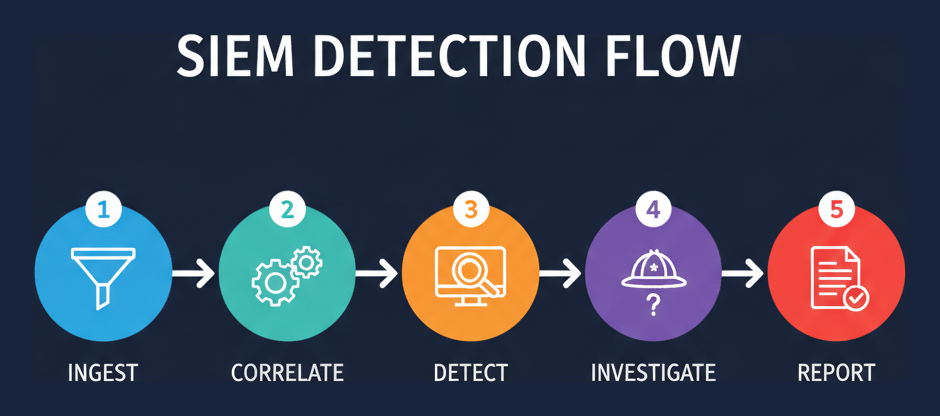
Correlation rules stitch individual events into a single meaningful signal, which is what separates a modern SIEM from a raw log viewer. Knowing the tactic and technique behind a detection lets you predict the adversary’s next move and prioritize accordingly. Grounding your study in the MITRE ATT&CK framework pays off directly, since the exam references those components when it asks you to classify a detection or judge investigative priority.
“Our single-agent, single platform architecture unifies native and third-party data with AI and workflow automation to deliver on the promise of the AI-native SOC.”
How Should You Approach Incident Investigation in Falcon?
Incident Investigation is the most weighted mindset on the CCSA-205 exam, because it combines every earlier skill into a decision. The domain asks you to reconstruct the chain of events for a detection, correlate logs across sources, and identify lateral movement, persistence, and privilege escalation. You then scope severity, interpret indicators of compromise, and recommend response or remediation steps grounded in evidence.
Strong analysts pivot deliberately: from a user to the endpoints they touched, from an IP to its reputation and geolocation, from a process to its parent. Falcon Fusion SOAR workflows let you contain or remediate malicious activity once the picture is clear, and Case Management captures the narrative. To see how a responder builds and closes out that same chain, this Falcon Responder study guide complements the analyst view well.
An investigation checklist for the exam
- Assemble the timeline before assigning severity, not after.
- Correlate at least two independent data sources for every conclusion.
- Map observed behavior to tactics so scope and impact are defensible.
- Recommend a remediation action that matches the confirmed evidence.
Who Should Pursue the CCSA-205 Certification?
The CrowdStrike SIEM Analyst certification fits professionals who already work in or are moving into detection and response, including SOC analysts, threat hunters, incident responders, and security engineers who consume SIEM output daily. CCSA-205 assumes comfort with core security concepts and log analysis, so it rewards candidates who have touched a SIEM before rather than complete newcomers to security operations.
It is especially valuable for analysts whose organizations run, or plan to adopt, Falcon Next-Gen SIEM, and for consultants who need to demonstrate platform-specific competence. If your daily reality is an alert queue, correlation rules, and investigation timelines, this credential formalizes skills you likely already exercise. Newcomers can still target it, but should budget extra hands-on time before attempting the 80 percent passing bar.
What Is the Smartest Way to Prepare for CCSA-205?
Preparation for the CCSA-205 exam works best when it mirrors the analyst workflow: query, interpret, investigate, and report. Because the exam is scenario-driven, hands-on repetition inside Falcon Next-Gen SIEM beats passive reading. Build a study cadence around the four domains, spend the most time on querying and investigation, and rehearse under the 90-minute, 60-question constraint so pacing becomes automatic well before exam day.
Anchor your reading in authoritative material and reinforce it with realistic questions. The vendor’s own education content on next-gen SIEM explained clarifies the concepts the exam assumes you know.
A four-week study rhythm
- Week 1: master CQL fundamentals, filters, operators, and time-window queries.
- Week 2: study detection types, correlation rules, and MITRE ATT&CK mapping.
- Week 3: run full investigations, practicing pivots, scoping, and IOC interpretation.
- Week 4: take timed practice exams, then remediate every missed objective.
Is the CrowdStrike SIEM Analyst Credential Worth It?
For security professionals building a detection-and-response career, the CrowdStrike SIEM Analyst credential is worth pursuing because it validates platform-specific, job-ready skills that hiring managers can trust. CrowdStrike’s dominance in endpoint and its rapid expansion into next-gen SIEM mean CCSA-205 aligns your resume with a platform enterprises are actively adopting, which strengthens both your internal mobility and your market value.
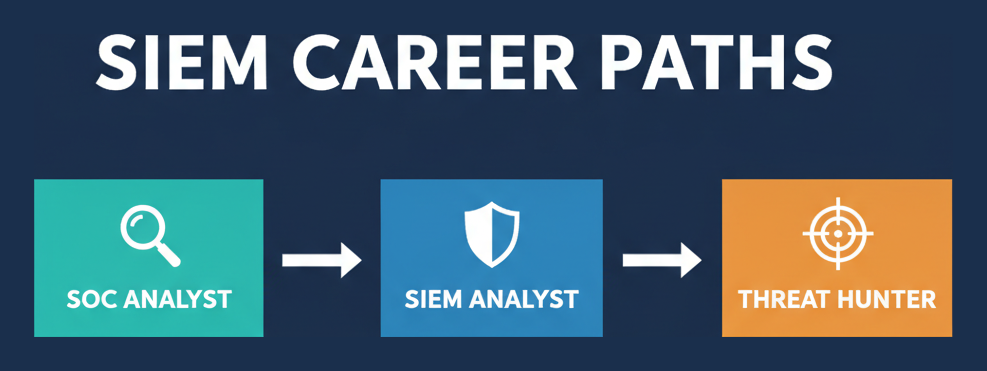
The credential signals more than tool familiarity; it demonstrates that you can convert telemetry into defensible decisions under time pressure. That analytical judgment transfers across SIEM platforms and SOC roles, so the investment compounds even as tooling evolves. Paired with practical experience, CCSA-205 positions you for senior analyst, threat-hunting, and incident-response tracks where correlation and investigation skills command a premium.
Frequently Asked Questions
What is the CCSA-205 exam?
CCSA-205 is the exam code for the CrowdStrike SIEM Analyst certification. It validates an analyst’s ability to query, interpret, and investigate security data inside Falcon Next-Gen SIEM, covering querying and analytics, detection logic, incident investigation, and reporting.
How many questions are on the CrowdStrike SIEM Analyst exam?
The exam contains 60 questions and must be completed within 90 minutes. That pace allows roughly 90 seconds per question, so timed practice is essential to finish comfortably.
What is the passing score for CCSA-205?
You need to score 80 percent to pass. Because that threshold is high, thorough coverage of all four domains and repeated practice under timed conditions are strongly recommended.
How much does the CCSA-205 exam cost?
The exam is priced at $250 USD. It is scheduled and delivered through Pearson VUE, where you can confirm availability and reschedule policies.
What query language does the exam test?
The exam tests CrowdStrike Query Language (CQL), including filters, logical operators, and time parameters, along with the CrowdStrike Parsing Standard for data-source-agnostic searches across host, network, and email datasets.
Do I need prior SIEM experience to take CCSA-205?
Prior exposure to SIEM tools and log analysis helps considerably. The exam assumes core security knowledge and analyst-level judgment, so candidates without hands-on SIEM time should budget extra lab practice.
How is a SIEM analyst different from a SIEM engineer?
An analyst consumes SIEM data to hunt, triage, and investigate threats, while an engineer builds and maintains the pipelines, parsers, and integrations that feed the platform. CCSA-205 focuses on the analyst workflow.
Does the exam cover MITRE ATT&CK?
Yes. The detection logic domain expects you to apply MITRE ATT&CK components used in Falcon Next-Gen SIEM to classify detections and prioritize investigations by tactic and technique.
How long should I study for CCSA-205?
A focused four-week plan works well for candidates with SIEM experience: one week each on querying, detection logic, investigation, and timed review. Newcomers should extend the querying and investigation phases.
What roles benefit most from this certification?
SOC analysts, threat hunters, incident responders, and security engineers who work with Falcon Next-Gen SIEM benefit most, as do consultants who must demonstrate platform-specific competence to clients.
Conclusion
The CrowdStrike SIEM analyst path rewards analysts who can think in queries, correlations, and timelines rather than in flashcards. CCSA-205 measures exactly that: 60 questions, 90 minutes, an 80 percent bar, and four domains that mirror a real SOC shift inside Falcon Next-Gen SIEM. Ground your exam data in the official syllabus, build fluency in CQL, and rehearse full investigations until pivoting feels automatic. Combine authoritative study material with realistic, timed practice, and the credential becomes a natural checkpoint on a detection-and-response career rather than a hurdle. Start with the querying domain, work outward to investigation and reporting, and book your exam once your practice scores clear 80 percent with room to spare.


