Navigating the path to LPIC-1 Linux Administrator certification requires strategic preparation, especially when tackling the LPIC 101-500 exam questions. This core exam, offered by the LPI (Linux Professional Institute), validates foundational Linux administration skills crucial for any IT professional. Success on the 101-500 exam signifies a candidate’s proficiency in essential Linux commands, system architecture, package management, and file systems.
Understanding the exam’s structure and key objectives is the first step towards building a robust study plan. This article provides smart tips and practical advice to help candidates confidently approach the LPI 101-500, ensuring thorough preparation for guaranteed success.
Understanding the LPI 101-500 Exam Structure
The LPI 101-500 exam is a critical component of the LPIC-1 certification, which establishes a candidate’s baseline as a Linux administrator. It focuses on command-line skills, system architecture, and basic system management. This section details the key aspects of the exam, helping candidates to set clear preparation goals. Once that vendor-neutral grounding is in place, the advanced Oracle Linux credential is one route into enterprise Linux on a single distribution.
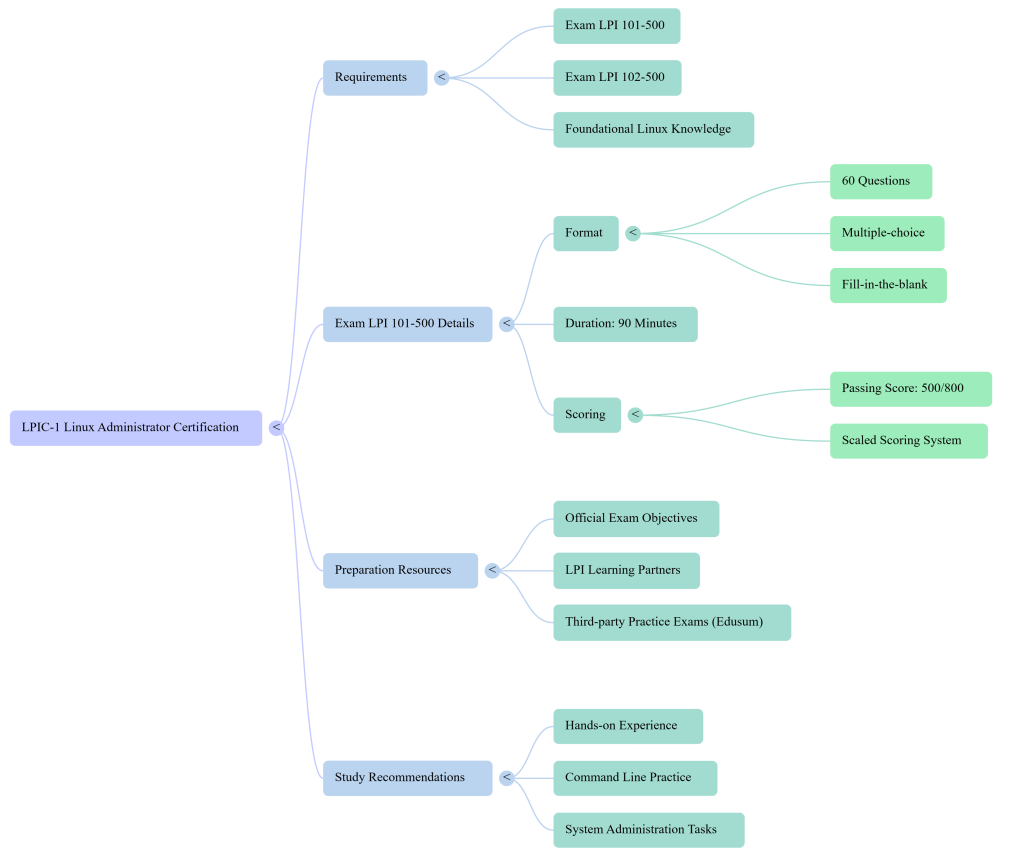
- Exam Name: LPIC-1 Linux Administrator
- Exam Code: 101-500
- Exam Price: $200 (USD)
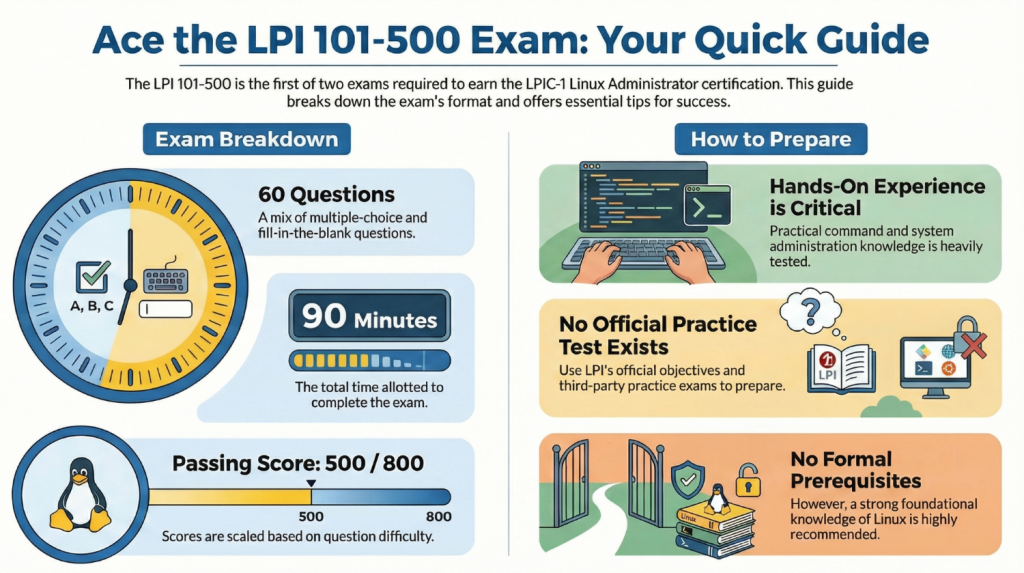
- Duration: 90 minutes
- Number of Questions: 60
- Passing Score: 500 out of 800
Key Objectives of the LPIC 101-500 Certification
The LPIC-1 certification requires passing two exams: 101-500 and 102-500. Successfully completing both certifies an individual as an LPIC-1 Linux Administrator. The 101-500 exam objectives specifically cover a broad range of fundamental Linux tasks and concepts, which are detailed further on the official LPI overview page.
- Candidates should demonstrate proficiency in common GNU and Unix commands.
- Understanding hard disk layout and boot management is essential.
- Package management using Debian and RPM systems forms a core part of the syllabus.
- Basic file management, process control, and text stream manipulation are also heavily tested.
- Finally, candidates must be adept at creating and maintaining filesystems and managing user permissions.
Navigating the LPIC 101-500 Exam Syllabus
A comprehensive understanding of the LPIC 101-500 exam syllabus is paramount for focused study. The exam content is divided into several main topics, each with specific weightings indicating their importance. Reviewing these topics ensures all critical areas are covered during preparation.
✔System Architecture:
- Determine and configure hardware settings (Weight: 2)
- Boot the system (Weight: 3)
- Change runlevels / boot targets and shutdown or reboot system (Weight: 3)
✔Linux Installation and Package Management:
- Design hard disk layout (Weight: 2)
- Install a boot manager (Weight: 2)
- Manage shared libraries (Weight: 1)
- Use Debian package management (Weight: 3)
- Use RPM and YUM package management (Weight: 3)
- Understand Linux as a virtualization guest (Weight: 1)
✔GNU and Unix Commands:
- Work on the command line (Weight: 4)
- Process text streams using filters (Weight: 2)
- Perform basic file management (Weight: 4)
- Use streams, pipes, and redirects (Weight: 4)
- Create, monitor, and kill processes (Weight: 4)
- Modify process execution priorities (Weight: 2)
- Search text files using regular expressions (Weight: 2)
- Basic file editing (Weight: 3)
✔Devices, Linux Filesystems, Filesystem Hierarchy Standard:
- Create partitions and filesystems (Weight: 2)
- Maintain the integrity of filesystems (Weight: 2)
- Control mounting and unmounting of filesystems (Weight: 3)
- Manage file permissions and ownership (Weight: 3)
- Create and change hard and symbolic links (Weight: 2)
- Find system files and place files in the correct location (Weight: 2)
Effective Strategies for LPIC 101-500 Exam Prep
Successful preparation for the LPIC 101-500 exam prep requires more than just memorization; it demands a strategic approach to learning and practice. Candidates should focus on hands-on experience and consistent review of core concepts. Utilizing a structured LPIC 101-500 study guide can significantly enhance understanding and retention.
Leveraging Practice Questions and Study Materials
One of the most effective strategies involves consistently working through LPIC 101-500 practice questions. These practice tests help candidates become familiar with the exam format, question types, and time constraints. A robust practice test series helps reinforce learning and identify areas needing further attention.
• Start with Official Resources: Begin by consulting the official LPI documentation and learning objectives to build a foundational understanding. This ensures alignment with the exam’s expectations.
• Use Comprehensive Study Guides: Invest in high-quality study guides that cover all syllabus topics in detail. These guides often include explanations, examples, and review questions.
• Engage with Practice Exams: Regularly take full-length LPIC 101-500 exam simulations to gauge readiness. Platforms like Edusum’s LPI Linux Administrator 101 resources offer valuable mock exam platforms to simulate the actual test environment.
• Review Incorrect Answers: For every practice question answered incorrectly, spend time understanding why the correct answer is right and why other options are wrong. This deep dive solidifies knowledge.
It is crucial to prioritize ethical study methods. Relying on “exam dumps” or leaked questions is not only unethical but also unreliable. These materials often contain outdated or incorrect information, leading to failed attempts and a lack of genuine understanding. Focus on learning the concepts thoroughly, which is the only way to genuinely achieve certification and competence.
Mastering LPIC 101-500 Exam Questions for Confidence
Approaching the actual LPIC 101-500 real exam questions with confidence stems from rigorous preparation and a solid understanding of Linux fundamentals. Developing a systematic approach to answering questions can significantly improve performance on the test day. This involves more than just knowing the answers; it’s about efficient problem-solving.
Tips for Tackling Test Questions
Effective management of LPIC 101-500 test questions during the exam can make a significant difference. Candidates should focus on understanding the core problem each question presents rather than rushing through. Many questions require a deeper grasp of how Linux components interact.
1. Read Carefully: Always read each question and all answer choices completely before selecting an answer. Misinterpreting a keyword can lead to an incorrect response.
2. Eliminate Obvious Wrong Answers: Use a process of elimination to narrow down choices. This strategy increases the probability of selecting the correct answer, even if unsure.
3. Time Management: Allocate time wisely across all 60 questions within the 90-minute limit. If a question is too challenging, mark it for review and move on to others.
4. Hands-on Practice: Beyond mere theoretical knowledge, practical experience with Linux commands is invaluable. Set up a virtual machine and execute commands regularly to build muscle memory.
5. Utilize Free Practice Tests: Take advantage of any LPIC 101-500 free practice test available from reputable sources. These provide a low-stakes environment to test knowledge and strategies.
For additional resources, consider exploring a wide range of LPI 101-500 certification sample questions to broaden your exposure to question styles.
Overcoming Challenges to Pass LPIC 101-500
Many candidates wonder how to pass LPIC 101-500, often facing common challenges such as extensive syllabus content or complex command syntax. Overcoming these hurdles requires persistence and the right strategies. Adopting a growth mindset and breaking down the syllabus into manageable chunks can make the journey less daunting.
• Mastering the Command Line: The exam heavily relies on command-line proficiency. Dedicate significant time to practicing commands and understanding their options and arguments.
• Understanding Weightings: Pay close attention to the topic weightings in the syllabus. Allocate more study time to high-weighted areas, as these will feature more prominently in the exam.
• Regular Review: Schedule regular review sessions to revisit topics previously studied. This helps in consolidating knowledge and preventing information decay.
• Join Study Groups: Collaborating with peers can provide new perspectives and clarify difficult concepts. Discussing topics with others often highlights overlooked areas.
• Utilize LPIC 101-500 Review Questions: Incorporate specific LPIC 101-500 review questions into your study routine to pinpoint weak spots and track progress effectively.
Frequently Asked Questions
Question 1: What are the requirements for LPIC-1 Linux Administrator certification?
To achieve the LPIC-1 Linux Administrator certification, candidates must successfully pass two exams: LPI 101-500 and LPI 102-500. There are no prerequisite certifications for LPIC-1, but strong foundational knowledge of Linux is recommended.
Question 2: How many questions are on the LPI 101-500 exam?
The LPI 101-500 exam consists of 60 multiple-choice and fill-in-the-blank questions. Candidates have 90 minutes to complete the exam.
Question 3: What is the passing score for the LPI 101-500 exam?
A score of 500 out of 800 is required to pass the LPI 101-500 exam. The scoring is scaled, reflecting the difficulty of questions.
Question 4: Are there any official LPI 101-500 practice tests available?
LPI does not provide an official practice test with exact exam questions. However, LPI endorses various learning partners and provides detailed exam objectives on their website. Reputable third-party platforms like Edusum offer practice exams that align closely with the official syllabus.
Question 5: How important is hands-on experience for the LPI 101-500 exam?
Hands-on experience is extremely important for the LPI 101-500 exam. Many questions test practical understanding of Linux commands and system administration tasks. Regular practice on a Linux system is highly recommended to reinforce theoretical knowledge.
Conclusion
Achieving the LPIC-1 certification opens doors to various career opportunities in Linux administration and support roles. Following these smart tips and focusing on practical application will build the necessary skills and confidence to succeed. Consistent effort and strategic preparation are the cornerstones of passing the LPI 101-500 exam.
Ready to strengthen your Linux administration knowledge and secure your LPIC-1 certification? Dive into focused preparation by leveraging high-quality study materials and practice tests. Start refining your skills today and download comprehensive LPI 101-500 practice exam PDF resources to gain an edge in your studies.