Project management is no longer judged only by scope, schedule, cost, and delivery speed. Organizations now want projects that create measurable business value while reducing environmental harm, improving social outcomes, and supporting long-term resilience. This is where the PMI GPM-b certification, officially known as PMI Green Project Manager – Basic, becomes a powerful career move.
The PMI GPM-b certification helps professionals demonstrate foundational knowledge of sustainable project management. It is designed for people who want to connect project decisions with environmental stewardship, social responsibility, and economic value. For project managers, coordinators, sustainability professionals, consultants, operations leaders, and aspiring project professionals, the credential offers a practical way to stand out in a market where green skills are becoming increasingly important.
If you are planning to take the PMI GPM-b exam, this guide will help you understand the exam structure, syllabus, career benefits, study strategy, and long-term value of the certification. It also explains how to use practice-based preparation through resources such as the ProcessExam PMI GPM-b exam page.
Most importantly, this article is not just about passing an exam. It is about preparing for a future where project leaders are expected to deliver results responsibly.
What Is the PMI GPM-b Certification?
The PMI Green Project Manager – Basic certification, commonly searched as PMI GPM-b, validates your understanding of sustainable project management principles and delivery approaches. It focuses on how project professionals can apply sustainability thinking throughout the project life cycle.
The certification is based on sustainability-focused project management concepts such as the P5 Standard, PRiSM fundamentals, governance practices, ethics, impact lenses, and sustainable delivery methods. These areas help professionals look beyond short-term project output and evaluate broader consequences for people, planet, prosperity, process, and product.
In simple terms, PMI GPM-b helps you answer questions such as:
- How can a project reduce waste?
- How can stakeholder value be increased without increasing environmental impact?
- How can sustainability be built into project planning instead of treated as an afterthought?
- How can project managers balance business goals with social and environmental responsibility?
That practical focus makes the certification especially relevant for professionals working in construction, energy, IT, manufacturing, consulting, public sector projects, infrastructure, healthcare, education, and corporate transformation.
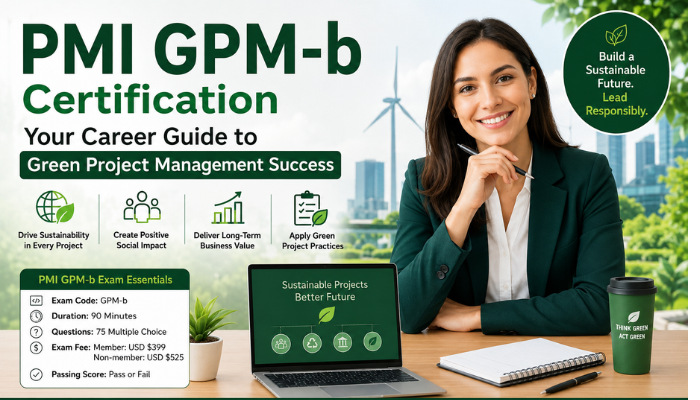
PMI GPM-b Exam Details at a Glance
Before building your study plan, start with the basic exam facts.
- Vendor: PMI
- Exam Name: PMI Green Project Manager – Basic
- Exam Code: GPM-b
- Exam Duration: 90 minutes
- Number of Questions: 75
- Question Format: Multiple Choice Questions
- Passing Score: Pass or Fail
- Exam Fee PMI Member: USD $399; Non-member: USD $525
The PMI GPM-b exam is short enough to feel manageable but focused enough to require disciplined preparation. With 75 multiple-choice questions in 90 minutes, you need both knowledge and speed. You should be able to recognize terms, understand concepts, connect ideas, and apply sustainability principles in project scenarios.
PMI GPM-b Syllabus: What You Need to Study
The PMI GPM-b syllabus is divided into two major domains:
- Sustainable Methods 70%
- Delivery Methods 30%
This weighting tells you exactly where your preparation energy should go. Sustainable Methods is the larger section and should receive the majority of your study time. However, Delivery Methods should not be underestimated because it tests whether you understand how sustainability concepts are applied during real project delivery.
Domain 1: Sustainable Methods – 70%
This domain is the heart of the PMI GPM-b exam. It focuses on the foundations, principles, frameworks, and impact areas of sustainable project management.
Key areas include:
- Sustainability initiatives and fundamentals
- PRiSM method fundamentals
- Sustainable projects and sustainable project management practices
- PRiSM supporting processes
- Sustainability ethics, principles, and values
- Governance practices, processes, and frameworks
- Processes, categories, subcategories, and elements of the standard
- Product impact lenses
- Process impact lenses
- Social impacts
- Environmental impacts
- Prosperity impacts
This section tests your ability to understand sustainability as a structured project management discipline. You are not just memorizing green terms; you are learning how sustainability connects with governance, ethics, stakeholder outcomes, and project value.
Domain 2: Delivery Methods – 30%
The Delivery Methods domain focuses on applying sustainable project management concepts during delivery.
Key areas include:
- PRiSM fundamentals delivery methods
- Management activities across PRiSM project life cycle phases
- PRiSM supporting processes delivery methods
- Delivery methods related to ethics, principles, and values
- Governance practices and frameworks in delivery
- Sustainable project management practices in delivery
- Social impact delivery methods
This domain is important because employers do not only want people who understand sustainability theory. They want professionals who can bring sustainability into planning sessions, risk reviews, procurement decisions, stakeholder conversations, project governance, and final outcomes.
Why PMI GPM-b Certification Is a Smart Career Move
The business world is moving toward sustainability, ESG reporting, responsible procurement, climate-conscious operations, and long-term resilience. This shift creates a major opportunity for project professionals.
Projects are where strategy becomes reality. If an organization wants to reduce emissions, improve supply chain responsibility, adopt circular economy practices, or build more resilient infrastructure, those goals are usually executed through projects. That means project managers who understand sustainability can become highly valuable.
The PMI GPM-b certification can help you in several ways.
First, it gives you a recognized credential from PMI, a globally known project management organization. That recognition can help employers quickly understand that you have studied sustainable project management in a structured way.
Second, it expands your project management mindset. Traditional delivery success is still important, but sustainable project management adds a wider lens. You learn to think about environmental impact, social impact, long-term value, governance, and ethical decision-making.
Third, it can help you enter or grow within sustainability-focused roles. These may include green project coordinator, sustainability project manager, ESG project analyst, sustainable operations specialist, project consultant, or transformation manager.
Fourth, it positions you for the future. As regulations, stakeholder expectations, and corporate sustainability goals become more demanding, project professionals with green project management knowledge will be better prepared.
Who Should Take the PMI GPM-b Exam?
The PMI GPM-b exam is suitable for professionals who want to combine project management with sustainability. You may be a good candidate if you are:
- A project manager who wants to lead greener projects
- A project coordinator looking for a future-ready specialization
- A sustainability professional who works with project teams
- A consultant supporting ESG or transformation initiatives
- An operations professional involved in process improvement
- A construction, energy, IT, or infrastructure professional seeking sustainable delivery skills
- A CAPM, PMP, PgMP, or PfMP holder who wants to expand into sustainability
- A student or early-career professional interested in responsible project delivery
The certification is especially useful if you want your resume to show more than general project management capability. It signals that you understand the growing importance of sustainable outcomes.
Career Opportunities After PMI GPM-b Certification
Earning PMI GPM-b does not automatically guarantee a specific job title, but it can strengthen your profile for roles where sustainability and project delivery overlap.
Potential career paths include:
- Green Project Manager
- Sustainability Project Coordinator
- ESG Project Analyst
- Sustainable Operations Specialist
- Environmental Project Coordinator
- Corporate Sustainability Associate
- Infrastructure Project Coordinator
- Sustainable Construction Project Professional
- Transformation Project Manager
- Project Management Consultant
The credential can also help existing project managers become more competitive within their current organizations. Many companies already have sustainability goals, but they struggle to translate those goals into execution. A project professional who understands both delivery and sustainability can become the bridge between strategy and action.
PMI GPM-b and the Rise of Green Skills
Green skills are becoming a career advantage across industries. Organizations need people who can understand carbon impact, resource efficiency, stakeholder value, ethical governance, and long-term project consequences. However, many professionals still treat sustainability as a separate function owned only by environmental teams.
The future will be different.
Sustainability will increasingly be integrated into project charters, procurement decisions, risk registers, business cases, stakeholder engagement plans, and benefits realization. This means project professionals will need to ask better questions before work begins.
For example:
- Can we choose lower-impact materials?
- Can we reduce waste during delivery?
- Can we design for long-term maintainability?
- Can we improve community outcomes?
- Can we measure benefits beyond immediate financial return?
- Can we reduce negative impacts across the product life cycle?
The PMI GPM-b certification helps you build the vocabulary and structure needed to participate in these conversations confidently.
How to Prepare for the PMI GPM-b Exam
A strong PMI GPM-b study plan should balance official concepts, syllabus coverage, practice questions, and review. Since the exam is multiple choice, you need to prepare for both knowledge recall and scenario recognition.
Step 1: Understand the Exam Blueprint
Start with the syllabus. The domain weightings are your study map. Since Sustainable Methods accounts for 70% of the exam, give it more time. However, reserve focused study blocks for Delivery Methods because application-based questions can be tricky.
Use the ProcessExam PMI GPM-b certification exam syllabus page as a quick reference to keep your preparation aligned with the exam domains.
Step 2: Build a Study Calendar
Do not study randomly. A four-week plan works well for many candidates.
1 Week: Sustainable project management fundamentals, sustainability initiatives, PRiSM basics
2 Week: Governance, ethics, principles, values, and impact lenses
3 Week: Social, environmental, and prosperity impacts; delivery methods
4 Week: Practice tests, weak-area revision, and final review
If you are already familiar with project management, you may need less time. If sustainability concepts are new to you, give yourself more time to absorb the language.
Step 3: Use Active Recall
Reading alone is not enough. After each topic, close your notes and explain the concept in your own words. Ask yourself:
- What does this concept mean?
- Why does it matter in sustainable project management?
- How could it appear in a project scenario?
- What mistake might a project manager make if they ignore it?
This approach helps you move from memorization to understanding.
Step 4: Practice with PMI GPM-b Exam Questions
Practice questions are essential because they reveal how well you can apply your knowledge under exam conditions. Use the PMI GPM-b practice resources from ProcessExam to test your readiness, improve speed, and identify weak areas.
Do not treat practice exams only as score generators. Treat each wrong answer as feedback. Review why the correct answer is right and why your selected answer was less suitable.
Step 5: Review Weak Domains Repeatedly
Many candidates make the mistake of reviewing what they already know because it feels comfortable. Instead, track your weak areas. If you consistently miss questions about governance, impact lenses, or PRiSM supporting processes, revisit those topics until your accuracy improves.
Suggested PMI GPM-b Study Strategy by Domain
Because the exam is weighted, your study plan should be weighted too.
Spend around 70% of your preparation time on Sustainable Methods. Focus on concepts, definitions, frameworks, impact categories, and the logic behind sustainable project management.
Spend around 30% of your time on Delivery Methods. Focus on how concepts are applied in life cycle phases, project activities, governance processes, and stakeholder-related decisions.
A practical study ratio could look like this:
- 7 study sessions for Sustainable Methods
- 3 study sessions for Delivery Methods
- 2 mixed review sessions
- 2 timed practice sessions
This structure keeps your preparation aligned with the exam while still giving you enough exposure to application-based delivery questions.
Common Mistakes to Avoid During PMI GPM-b Preparation
Many candidates are capable of passing the PMI GPM-b exam, but they reduce their chances by preparing inefficiently.
- The first mistake is ignoring the syllabus weight. Since Sustainable Methods is 70% of the exam, it deserves priority.
- The second mistake is memorizing terms without understanding their project relevance. The exam may test recognition, but real understanding helps you choose better answers.
- The third mistake is skipping practice tests. Multiple-choice exams reward familiarity with question style, timing, and elimination techniques.
- The fourth mistake is studying sustainability as a vague concept. PMI GPM-b focuses on structured sustainable project management, including methods, governance, ethics, delivery, and impacts.
- The fifth mistake is waiting until the final week to review weak areas. Start tracking gaps from the beginning.
How PMI GPM-b Supports Human-Centric Project Leadership
Sustainable project management is not only about environmental performance. It is also about people. A green project manager considers stakeholders, communities, teams, supply chains, customers, and long-term users.
This human-centric mindset is one reason PMI GPM-b can be career-changing. It helps project professionals move from “delivery manager” to “value leader.”
A human-centric project leader asks:
- Who benefits from this project?
- Who may be negatively affected?
- Are we creating long-term value or short-term output?
- Are decisions ethical and transparent?
- Are we balancing economic success with social and environmental responsibility?
These questions are increasingly important in modern organizations. Leaders who can ask them early and answer them responsibly will be better positioned for advancement.
PMI GPM-b vs Traditional Project Management Certifications
Traditional project management certifications often focus on project processes, leadership, risk, cost, schedule, stakeholders, and delivery performance. PMI GPM-b adds a sustainability lens to those familiar project concepts.
It does not replace credentials such as CAPM or PMP. Instead, it can complement them.
Whether you already possess a project management certification and want to develop a specialty, are at the beginning of your career and looking to create a distinctive profile in an expanding field, or work in sustainability and want to learn how sustainability objectives are achieved through organized project delivery, PMI GPM-b can support your goals.
This makes PMI GPM-b valuable for both project professionals and sustainability professionals.
Final Week Preparation Tips for PMI GPM-b
During the final week before your exam, avoid trying to learn everything from scratch. Instead, focus on consolidation.
- Review the two syllabus domains.
- Retake practice tests and compare your scores.
- Create short notes for confusing concepts.
- Practice answering questions within time limits.
- Review all incorrect answers carefully.
- Sleep well before exam day.
Since the exam has 75 questions in 90 minutes, time management matters. You have a little over one minute per question. If a question feels difficult, mark it, move on, and return later if time allows.
Exam-Day Mindset: Stay Calm and Think Like a Sustainable Project Leader
On exam day, your goal is not to overthink every question. Your goal is to choose the best answer based on sustainable project management principles.
When unsure, ask yourself:
- Which option creates long-term value?
- Which option balances business, environmental, and social responsibility?
- Which option best reflects governance, ethics, and sustainability principles?
- Which option supports responsible delivery rather than short-term convenience?
This mindset can help you eliminate weak answers and identify the most suitable choice.
Conclusion: PMI GPM-b Is More Than an Exam
The PMI GPM-b certification is more than a credential for your resume. It is a signal that you are preparing for the next chapter of project management.
As sustainability becomes central to business strategy, project professionals will be expected to deliver more than outputs. They will need to deliver responsible outcomes. They will need to understand environmental impact, social value, governance, ethics, and long-term prosperity.
By preparing for the PMI GPM-b exam, you are investing in a career direction that is practical, relevant, and future-focused. Whether you want to move into sustainability projects, strengthen your project management profile, or become a more responsible delivery leader, PMI GPM-b can help you take that next step.
To begin your preparation, review the PMI GPM-b exam details on ProcessExam, study the official syllabus topics, and use practice tests to build confidence before exam day. The future of project management is sustainable, and this certification can help you become part of that future.
Frequently Asked Questions About PMI GPM-b
What is PMI GPM-b?
PMI GPM-b stands for PMI Green Project Manager – Basic. It is a sustainability-focused project management certification that validates foundational knowledge of sustainable project management principles and delivery methods.
How many questions are on the PMI GPM-b exam?
The PMI GPM-b exam includes 75 multiple-choice questions.
How long is the PMI GPM-b exam?
The exam duration is 90 minutes.
What are the main PMI GPM-b syllabus domains?
The exam covers two domains: Sustainable Methods, weighted at 70%, and Delivery Methods, weighted at 30%.
Is PMI GPM-b useful for career growth?
Yes. PMI GPM-b can help project professionals demonstrate sustainability knowledge, strengthen their resumes, and prepare for roles where project delivery and sustainability goals overlap.
Is PMI GPM-b only for project managers?
No. It can also benefit project coordinators, sustainability professionals, consultants, operations professionals, and early-career professionals interested in green project delivery.
How should I prepare for PMI GPM-b?
Start with the syllabus, study each domain based on its exam weight, use active recall, take practice exams, and review weak areas regularly.
Where can I practice for the PMI GPM-b exam?
You can use PMI GPM-b practice exam resources from ProcessExam to build confidence, test your knowledge, and improve exam readiness.


